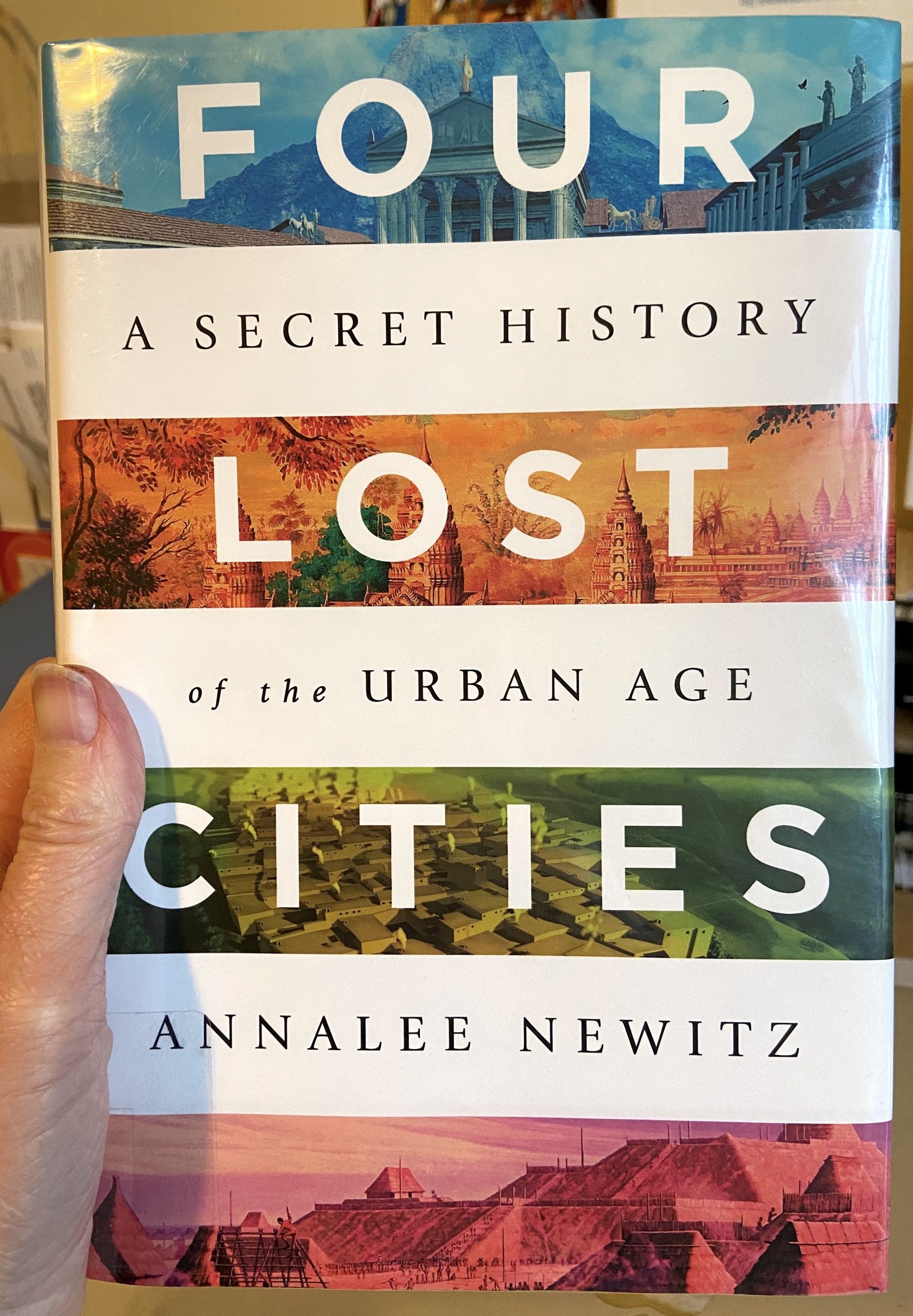
Four Lost Cities

Four Lost Cities is a book about, well, four cities that are supremely different than they once were, if they’re even still with us at all. She is looking, I think, to explain how different cities exist, but also about how they end.

The first one is Çatalhöyük, in Turkey. This is a ruin of a city that is so old that it’s impossible to tell if it really was a city. I mean, it’s a large gathering of people who seem to live permanently together, but there’s little evidence of serious coordination of effort. So, everyone was making their own bread, tending their own farms, gathering their own food, burying their own dead. People started moving elsewhere when the 8.2 kilo-year climate shift happened, to where they could grow food more easily.

The second lost city is one you’ve probably heard of: Pompeii. Vesuvius exploded in 79CE, covering the city in super-heated ash. It was uninhabitable for a long time to come. I’m not going to cover what life was like in a Roman Imperial City – you can find that elsewhere – but I am going to talk about why it wasn’t rebuilt. The Roman Empire did a good job at making sure refugees from Pompeii were able to settle elsewhere, and there’s evidence that they formed communities in other cities relatively near Pompeii. The new information to me was just how terrible the ash was. The actual rock-and-mud flows were over 340F and with the layers of ash on top, they retained that heat for years. Not to mention that ash is incredibly fine and dense – the fact she cites is that new snow is 50-70kg per cubic meter; the ash is 700-3200kg/cubic meter. It’s a lot of work; resettling the refugees was a much more practical solution.

The third “lost” city is Angkor, in Cambodia, and I’m sure that the people living there were surprised when a French explorer in the 1800s decided they were a lost city. It was an extreme bit of colonization. Though, to be fair, it was a much larger city, primarily existing for worship, when changes in rainfall made its extensive reservoir-and-canal system unworkable. They couldn’t keep up with repairs and there were other power centers that the royal family could use instead. So the city shrunk and was mostly reclaimed by the jungle.

The last lost city is one that is truly lost: Cahokia, which was a major center of civilization near St Louis, MO from 900CE until it finally completely was lost in about 1350. It’s known as the Mississippian culture, largely because its artifacts have been found all up and down the Mississippi River. The city was larger than Paris in 1050AD, but there is no written record of it and study really only started in the mid-twentieth century. Researchers don’t even know if they called themselves the Cahokia; the Cahokia were the tribe that was in the St Louis when white people arrived. There is some evidence of Cahokian – the city, not the current day Tribe – stories integrated into the Sioux myths. This is the city that for me is the most intriguing – this one is part of American history that I didn’t learn in school (that may be different now), and I am eager to learn more.

Overall, Four Lost Cities is a very broad book covering a lot of ground. There isn’t a compare-and-contrast section, like you might expect in an academic work. It’s a popular book, designed to give the reader an overview. It was good, but I was left wanting for more.
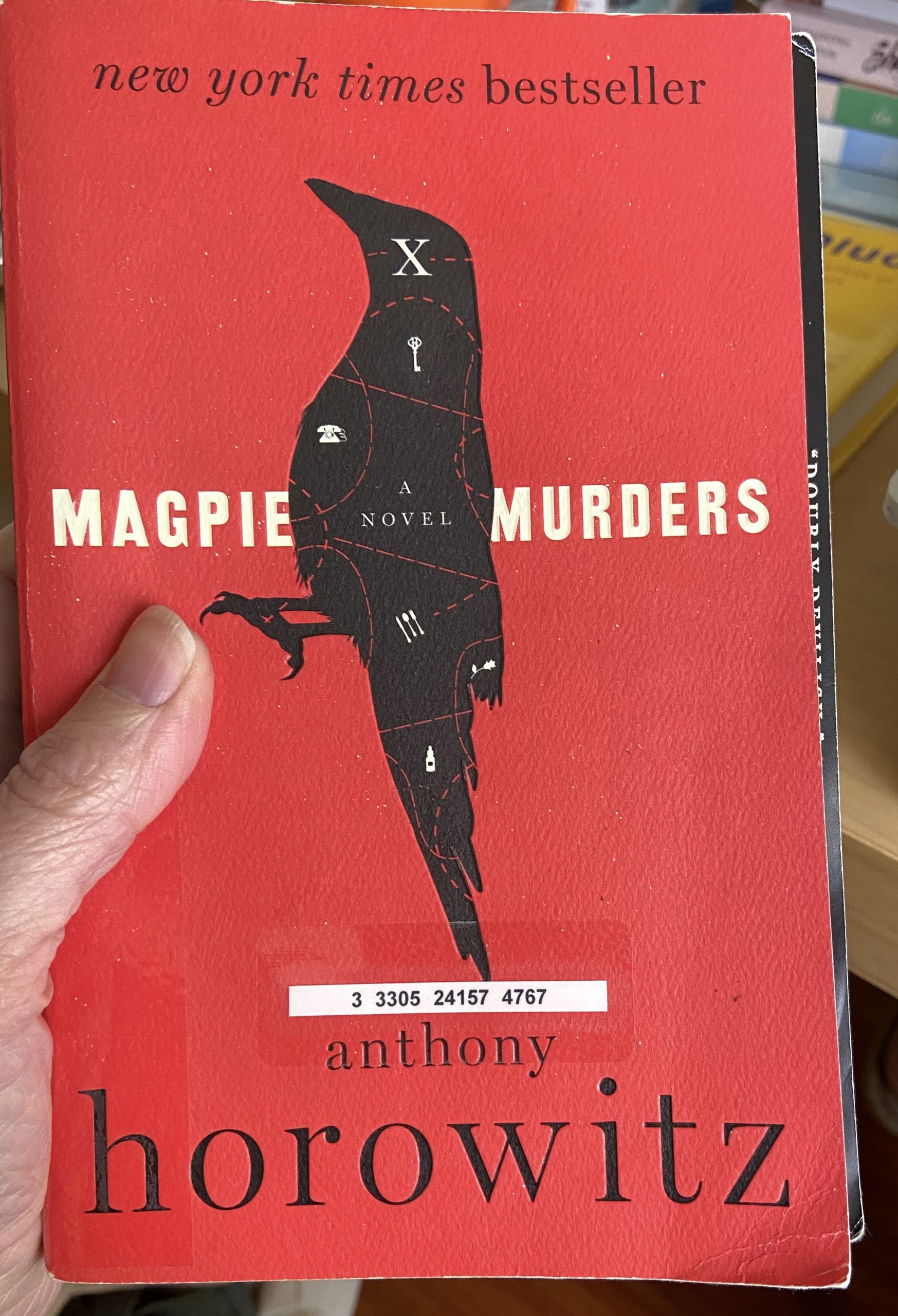
Magpie Murders

Magpie Murders is your basic murder mystery. Someone who isn’t very like-able is murdered, there is a cast of characters, clues along the way, someone who isn’t an official police detective who isn’t willing to buy the party line, with a resolution at the end. But there is a clever conceit to this one – the murdered person is a murder mystery author. And their latest book contains enough clues that you actually get to read the second book, embedded within Magpie Murders.

Anthony Horowitz is the creator of Foyle’s War, a murder mystery series on PBS that I enjoy, and the book-embedded-in-the-book has some of that energy. He has also worked on Midsomer Murders, in case that particular PBS murder mystery show is more your jam. The point: the guy knows how to construct a mystery – this isn’t his first book, either – and the plot is satisfying. My only criticism is that the characters were a little on the bland/stereotype side. But overall, I enjoyed it.

The Barbizon

A photo of the book "The Barbizon" by Paulina Bren on my very, very messy desk.

The Barbizon is a chronicle of a particular time and place in America. The time is after the first wave feminists have won women the right to vote, but before Federal policies designed to move (white) people out to the suburbs decimated urban America in the 1970s. The place is The Barbizon Hotel, an upscale women-only boarding house not quite in the Upper East Side of Manhattan. Only some meals were included, but housekeeping always was, to allow you to pursue your dreams.

The hotel was meant to be a safe space for attractive, white, middle and upper-middle class young unmarried women. A place for them to come to New York City, to get a career, usually as a model, actress, writer, or a secretary. A place for them to stay that was safe, where their parents wouldn’t worry about them. Grace Kelley stayed there, and so did Sylvia Plath and Joan Didion.

And it largely worked: it gave women a space to come to New York City, to be adventurous within a restrictive society’s boundaries, to explore who they wanted to be, at least if you were of a certain type. There is some mention of the restrictiveness of who was allowed to stay there; the final chapter, about the hotel as NYC fell into the 1970s and the future, could examine more about how The Barbizon was a product of its time and it was no longer its time.

I really enjoyed the book. The Barbizon Hotel has a certain imprint on movies and books – if you’ve read The Bell Jar, you’ve read a depiction of the hotel – and it was good to get a grounding on what it really was, how it worked, how it allowed freedom for some and what that freedom really looked like.

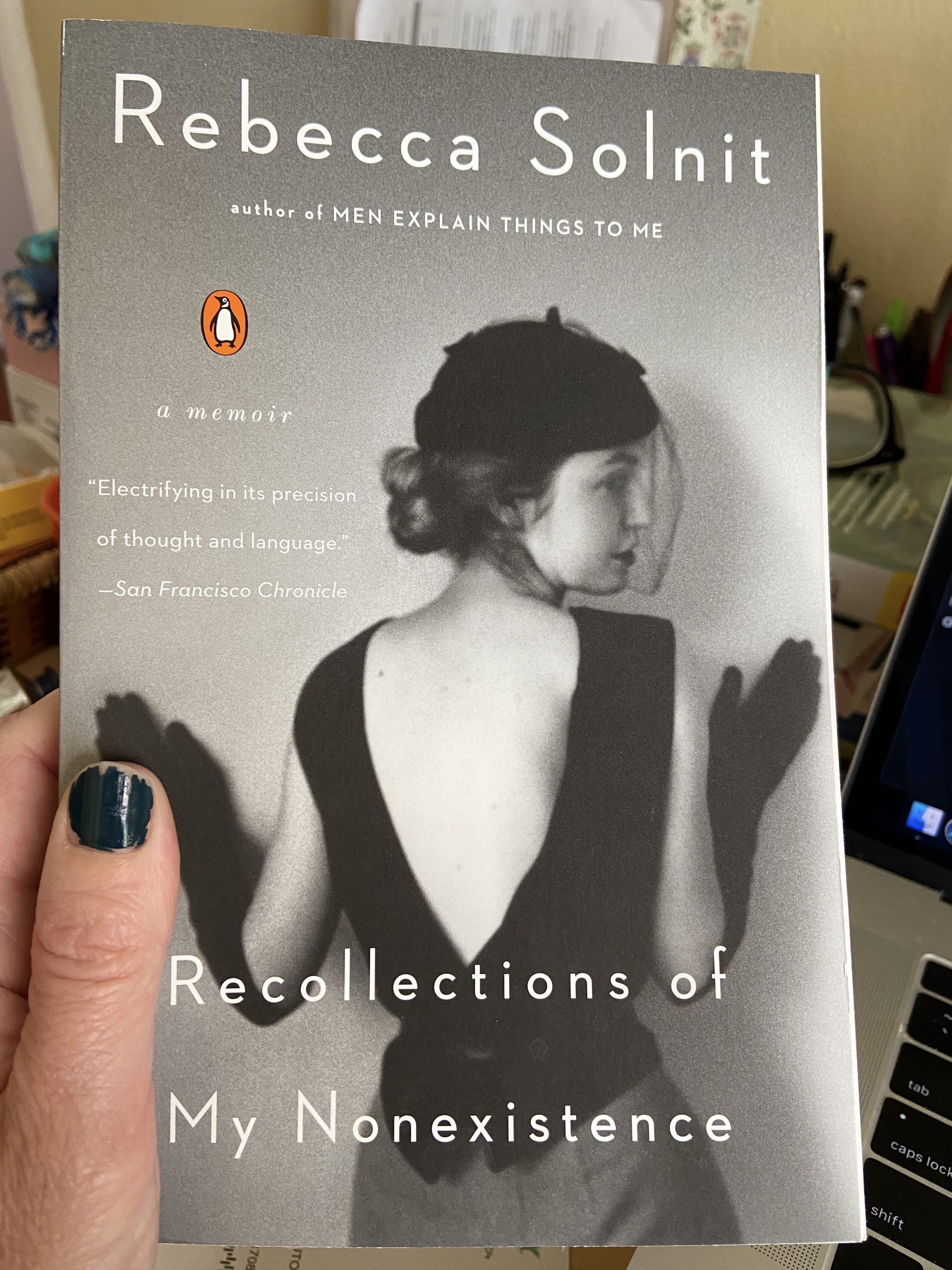
Recollections of My Nonexistence

Recollections of My Nonexistence is a series of essays about growing up in the West, about becoming a writer, about being a woman who wants to do things in a society that doesn’t want women to do things. It’s also a story about a San Francisco that I worry doesn’t exist anymore, now that there has been so much money and so many tech people moving in and so many other people have been forced out.

But by and large, there is a thread of sexism and violence against women that runs through the book – these being the ways that women are kept in roles they don’t necessarily want. These are the ways that society tries to pretend women don’t exist, by silencing them in so many ways, including killing them.

Women, you, me, all of us, have a right to exist and to be heard, just as much as men do. These essays are the story of how Rebecca Solnit learned what that means for her and how she moves through the world.

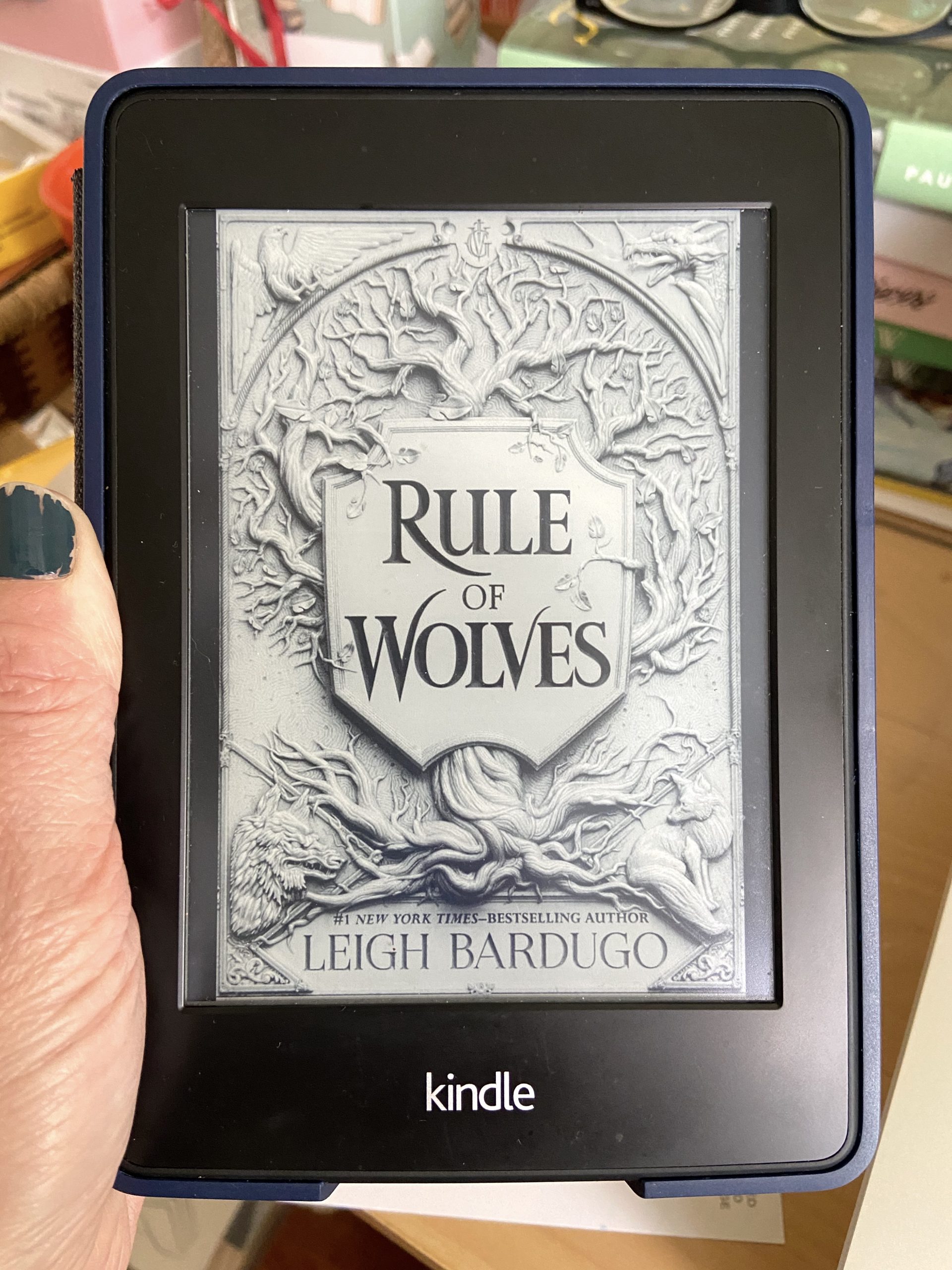
Rule of Wolves

Rule of Wolves cover displayed on a kindle.

Rule of Wolves is the latest book in the Grisha/Nikolai/Six of Crows series of YA books by Leigh Bardugo. It’s the second of the Nikolai books and if you haven’t read the first one, King of Scars, you’ll be lost. But you also won’t understand a whole lot of it if you haven’t read the three Grisha books either. The Six of Crows books are a little more tangential – those are nice-to-have-read, instead of you-won’t-understand-chunks-of-the-action.

All that said, the main challenge with these two books has been “how do you take a beloved side character – one who benefits from a bit of mystery – and turn him into a main character without lose that glamour that the mystery gives you?” The first book didn’t do too bad a job at that, but it’s this book that really turns Nikolai from that very charming side character and brings him into his own. The last book was trying to fit him into a mold of something that his character wasn’t – and maybe that was the point. He was trying to fit himself into something he wasn’t, not really.

This was an adventure-filled book with a decidedly feminist twist in it as well, which I won’t spoil. But, if you have read the rest of these books, Rule of Wolves is a fun addition to the story.

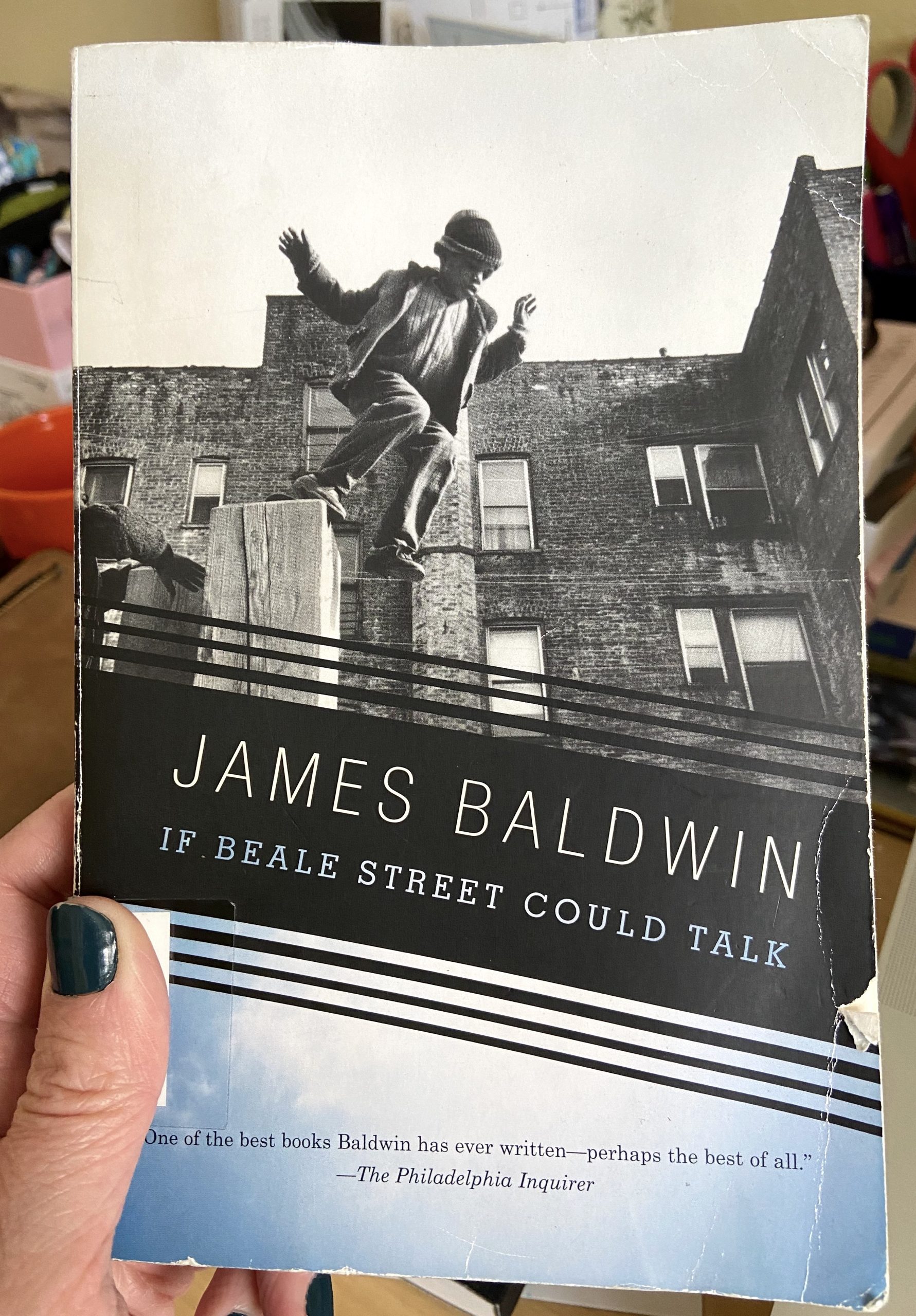
If Beale Street Could Talk

Well, that was devastating.

If Beale Street Could Talk is a wonderful book with so much love in it that is nonetheless about how structural racism can ultimately affect that love. Tish and Fonny are a young couple in love, and how they became a couple is told in flashbacks to the main story, where Fonny has been jailed for a crime he didn’t commit, and their struggle to free him.

It’s James Baldwin, so the language is marvelous; it’s James Baldwin, so the racism is cuttingly accurate. But what really struck me was all of the ways that love is shown in the story – the romantic love between Tish and Fonny, but also the friendship between Fonny and Daniel and the sisterly relationship between Tish and Ernestine and the parent-child relationship between Fonny and his father as well as Tish and her parents. The story is bleak, but the relationships and the caring that exists between people in the book was what made it worth reading to me.

Highly recommended.

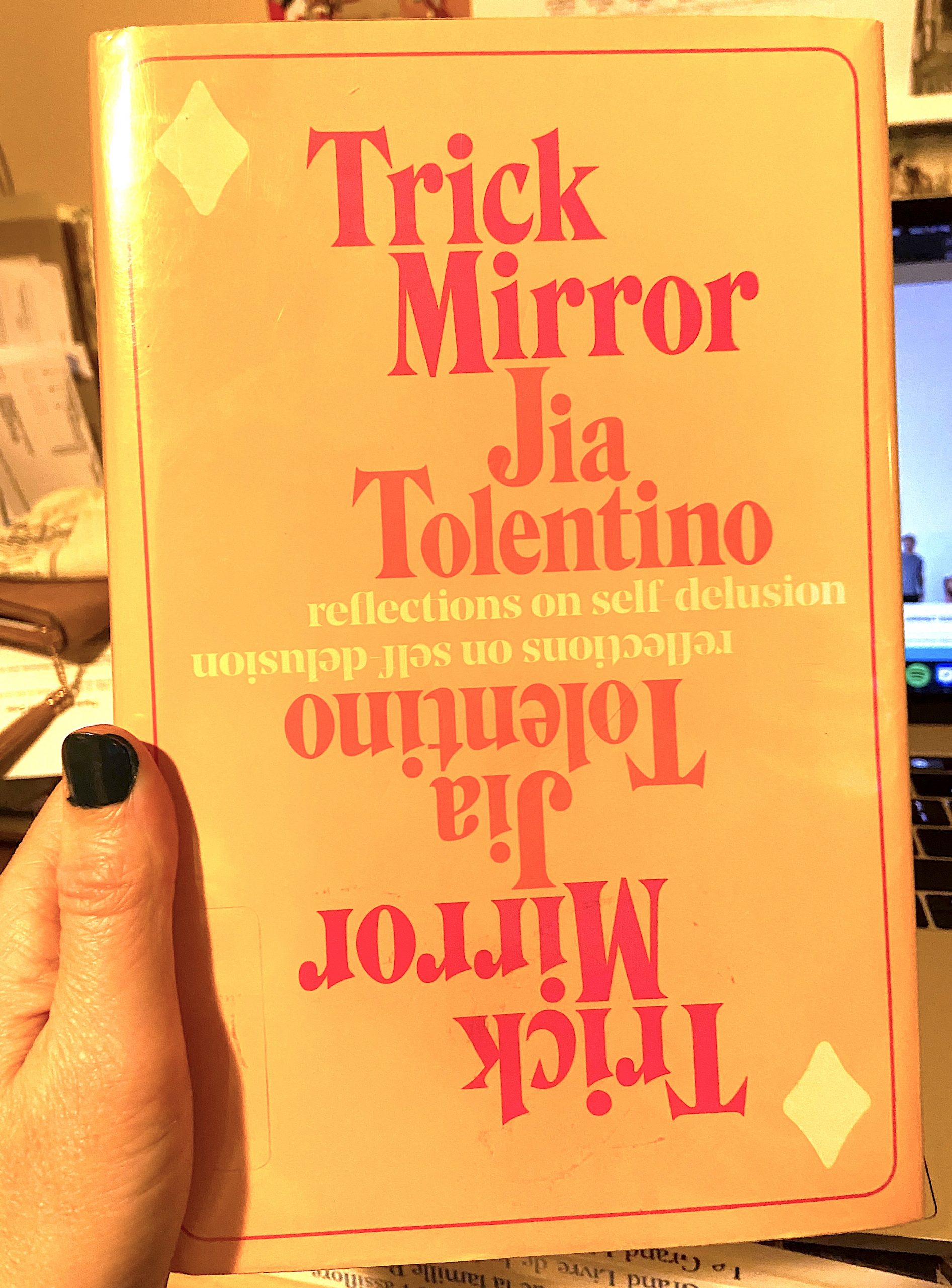
Trick Mirror

A hand holding a hardcover copy of Trick Mirror by Jia Tolentino.
I wasn’t trying to make some artistic statement with the terrible lighting – there just wasn’t enough of it.

Trick Mirror is Jia Tolentino’s much commented on set of essays published in 2019, blissfully pre-pandemic, but sadly still during the Trump presidency. She has been much praised for her insights into internet culture and brought out her feminist voice – and there has been the predictable backlash.

The strongest part of the book, for me, was her discussion of the internet, its now seemingly inevitable focus on the individual, and how that plays into the “forever hustling” culture. It helped me understand the takeover of the personality as fame-generator and monetizer. It was a movement that started before the internet really took over everyone’s lives – Martha Stewart Living was founded in 1997, the height of the pre-social internet boom – and I can remember being a college student in the mid-90s and being told to follow your passion, to make sure that you were always motivated to care about your work. Without those seeds in the culture, I’m not sure social media takes off as strongly as it does, at least in terms of people monetizing themselves.

The feminist parts, while strong and passionately argued, were less revelatory. Don’t get me wrong: in a society that still doesn’t take violence against women seriously, we need as many voices as we can talking about rape. But I felt like I’d read those parts before.

Trick Mirror is absolutely worth the read, especially for the first half of the book.

Victoria: The Queen

Victoria: The Queen is an overview of Victoria’s life, meant for non-academics. I picked it up from one of the Free Little Libraries in my neighborhood on a whim, because I know very little about Victoria, other than she was Queen for a very long time.

It was very readable, and you get the idea that she was a very passionate and ambitious women who had nonetheless fully digested the idea that women were inferior to men and that to be a wife and mother was the highest calling for a woman (in marked contrast to Germaine de Staël, the other historical woman I’ve read about recently). So when she marries Albert and he decides he wants to be king in all but name, she supports that. It leads, of course, to a crisis of self-confidence – she becomes less and less convinced that she knows what she’s doing as queen, even though they are co-rulers for much of the time, because her attention is taken up by their nine children.

After Albert dies, she does slowly regain her confidence in herself and her abilities, and her lifelong quest is for love and friendship. As Queen of England she has very few people she can be friends with, and she relies on her children and their families for that companionship.

In fact, I wonder if her reliance on a domestic image – she never stopped wearing mourning-wear after Albert died – was a way of undercutting the image of an all-powerful queen. “You can trust me! I’m just like you: raising my children, spending time with the grandkids! Pay no attention to the power behind the curtain.” Her age was not one that allowed women to be powerful leaders. She both loved her family and used them, to my mind, to allow her to stay on the throne. (She could have abdicated in favor of her son Bertie at any time, and never did.)

I quite liked Victoria: The Queen, even though I spent the Albert years railing against his overreach of his position, his manipulation of Victoria to get what he wanted, and Victoria allowing him to accrue power because she loved him. I would recommend it if you want to learn about her and have little idea of who she was.

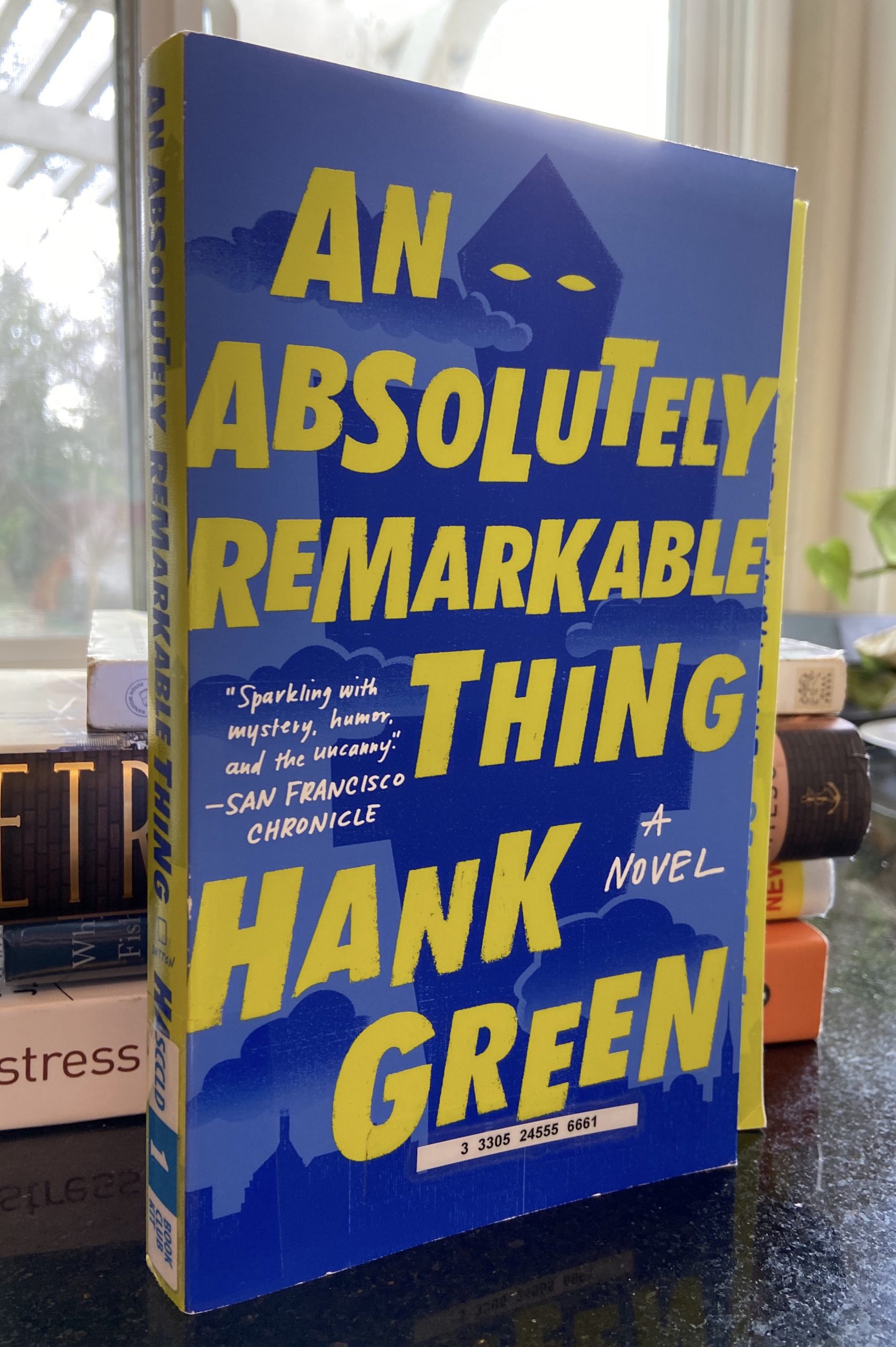
An Absolutely Remarkable Thing

An Absolutely Remarkable Thing is a first novel; it’s a good first novel, but it’s a first novel. I enjoyed the plot – a 23-year-old woman, fresh out of college, is the first person to document a series of sculptures, which she calls Carls, that turn out to have alien origin that suddenly turn up around the world. She decides she likes the attention, and positions herself and her co-you-tuber to be professional pundits about the sculptures.

The characters all have a tendency to sound the same – their voices aren’t fully developed, I don’t think. And there are a couple of small things that don’t get resolved in this book – there’s a sequel, which I might read just for completion’s sake. I’m choosing to believe that they’re clues for the next book instead of plot holes, anyway.

It does have this great bit of Bay-Area-specific commentary: “Oakland Carl was the only Carl in the San Francisco Bay Area, and San Franciscans were, frankly, offended.” Honestly? Spot on.

An Absolutely Remarkable Thing was a fun read that I doubt I’ll remember in a year. And that’s ok.

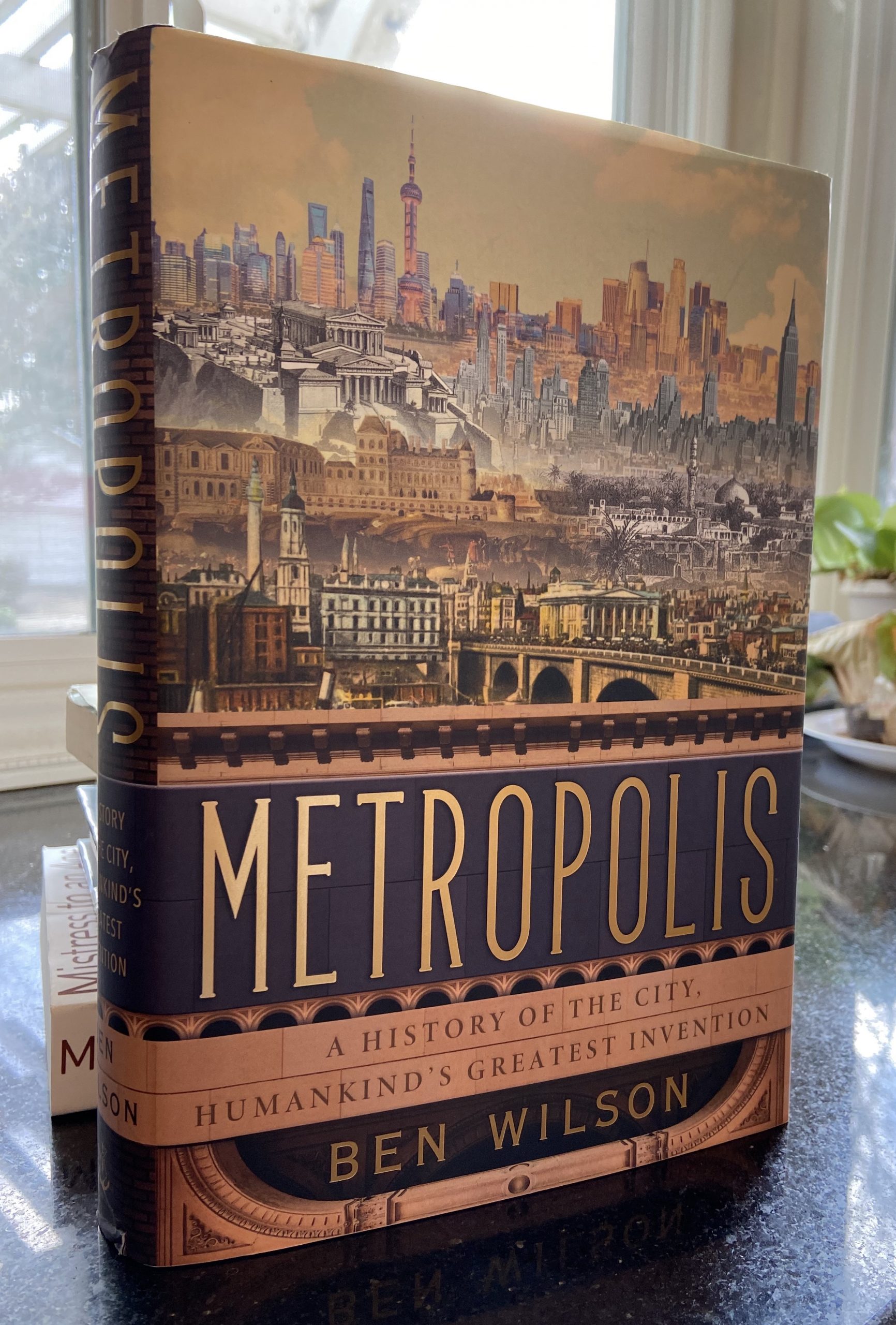
Metropolis

I coordinated my reading of Metropolis with listening to the episodes of The Tides of History about the rise of civilization and Uruk, the first city in Mesopotamia. Only the first chapter of Metropolis is about Uruk, but the podcast gave me structure of: what does civilization mean? What makes a city possible? Spoiler: a certain degree of wealth; often, religion is involved; and some sort of organization to coordinate activities.

Metropolis grazes over 6500 years of human history, from the founding of Uruk to the modern day – Covid-19 even makes its way into the introduction. Each era of human history is looked at through the focus of the city and what the city meant to that era of history. For example, for the Roman era, the book focuses on bathhouses, because they’re a stand-in for the engineering feats that were needed to get the plumbing in place, but they also signify how Roman culture evolved from the non-bathhouse-having hard-nosed citizens of the early republic to the more decadent subjects of the late empire.

The cities profiled are all over the world, too. While history tends to focus on European cities – and there’s a lot of Europe in here – Metropolis is doing its best to bring in cities from around the world: Baghdad, Malacca, Tenochtitlan, and Lagos to name a few. (It gets bonus points for making you really detest the combination of ignorance and superiority complex of the conquistadors.)

I’m personally a fan of cities. I like their energy and creativity and the way that they bring people together and make things happen in a way that being out in the country, or even in suburbia just doesn’t. Metropolis really captured that for me; I would definitely recommend it.