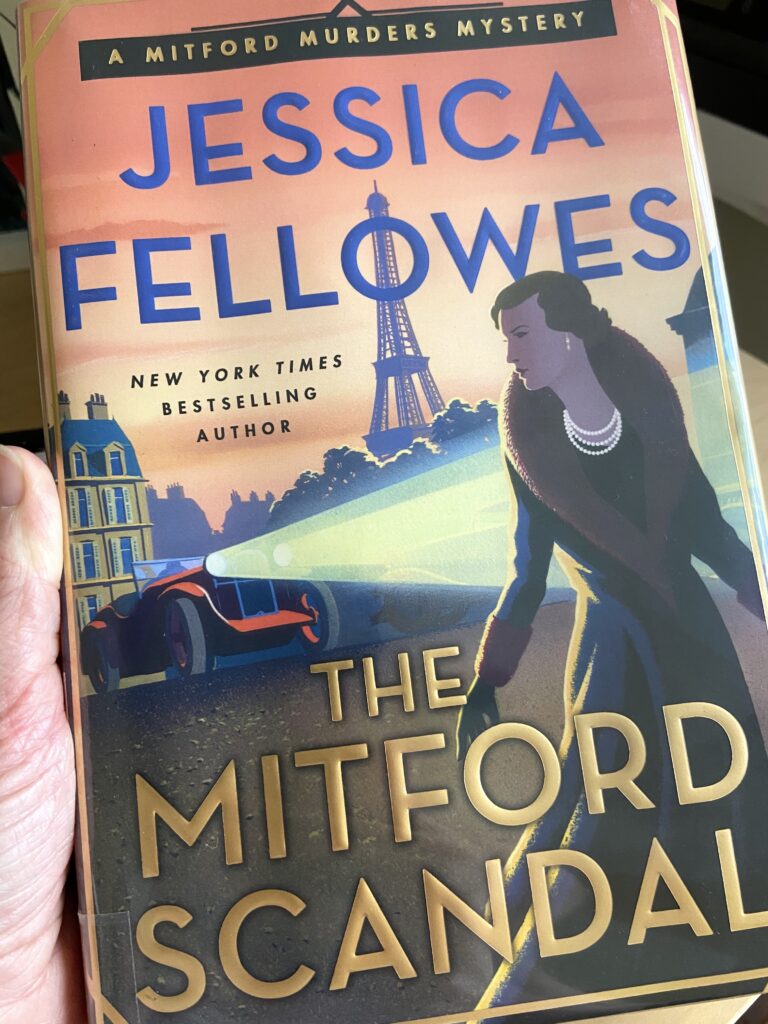
The Mitford Scandal

The Mitford Scandal is a cozy mystery that takes place in the late 1920s and early 1930s in London, Paris, and Venice. It’s the third in a series whose conceit is that Louisa Cannon is a ladies maid to each Mitford Sister. Each volume is about her helping out the next sister. Since this is the third book, this is the one that features Diana.

A quick aside: the Mitford Sisters were a bit like the Kardashians of their day. Nancy was the oldest, never married, and became a famous novelist. Pamela was the second, a bit of a homebody and possibly bi? or a lesbian? it’s unclear, given that she was the one who liked to stay out of the spotlight. Diana was the third sister and initially married Brian Guinness, of Guinness Brewing fame. But after a few years of marriage, she fell head over heels in love with Oswald Mosley, the head of the British Fascists and big Hitler fan. (Diana: beautiful but morally reprehensible.). Unity Mitford was the fourth sister, moved to Berlin and somehow managed to catch Hitler’s eye. When Britain declared war on Germany, she couldn’t bear it and shot herself in the head (she lived, somehow, for about ten more years). The fifth sister was Jessica, known as Decca. Decca was a committed communist and ran away from home before she was eighteen, and ended up living in San Francisco as a journalist. The final sister was Deborah, who had kind of had enough drama from her sisters. She did, however, become Lady Chatsworth, and navigated the family estate through some very harsh times and managed to turn it into a successful business.

Got it?

The mystery is about what you’d expect from a cozy mystery: some poisonings, a bit of generational tension, nothing graphic, and lots of glamorous locations. My issue is with the character of Diana.

If you read the long aside, you know that Diana was a fascist and an anti-semite. The Mitford Scandal basically ends right around the time she’s met Mosley, but before she’s left Brian for him. And Louisa doesn’t particularly like Diana, but she’s also very much treated with kid gloves. Diana is a person to quietly move away from rather than a person to be called out. She is beautiful and moves in very high society, which are definitely privileges. But I wanted her to be described as more than “cold” and have more than the few questionable character moments.

And I get that you can’t portray Diana as the fascist she was in a cozy mystery, especially not when you need to have Louisa stay in her employ for four years. So I feel like she is given a bit of a pass, and that didn’t sit well. Honestly, this is going to be a bigger problem in the next volume, because Unity moves to Berlin and becomes Hitler’s friend – I don’t know how you get around who she was and still keep it a cozy mystery.

Anyway: The Mitford Scandal is a decent cozy mystery, but do be aware of the white supremacist character being toned down for your consumption.
Weather by Jenny Offill

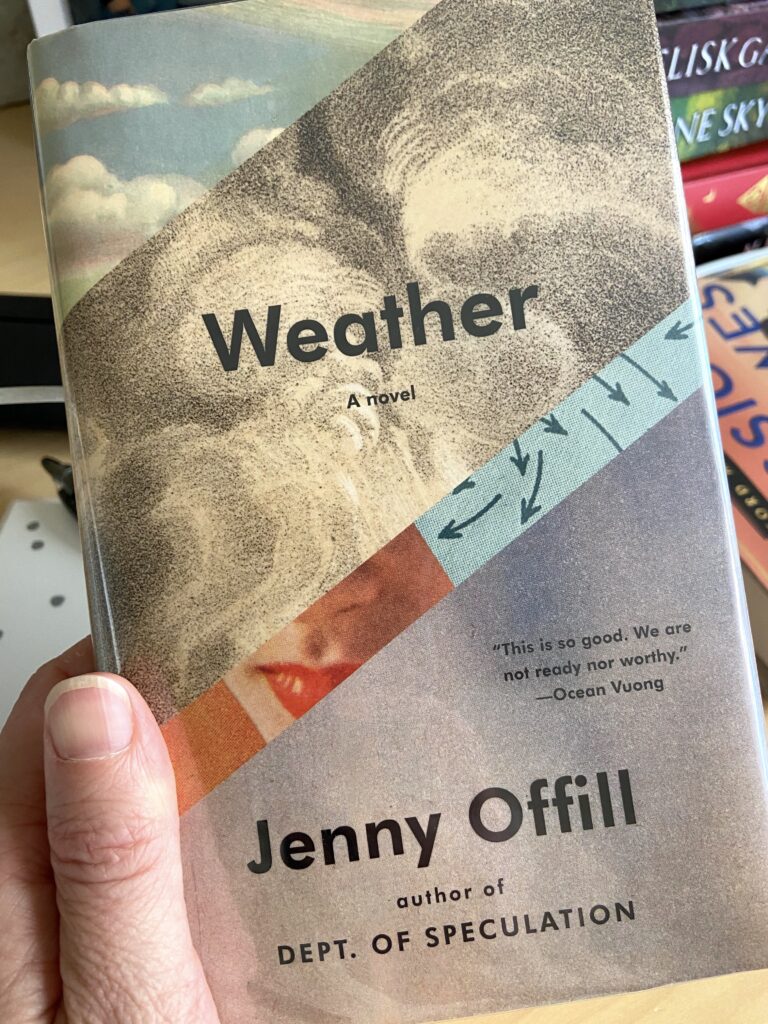
There is not much plot in Weather, by Jenny Offill, and that is to its credit. Plot would get in the way of the point, which is the day-to-day life of a librarian and mother of a small child in New York City who is increasingly worried about climate change. This book is full of hilarity, to wit (about a problem patron): “But how to categorize this elderly gentleman who keeps asking me to give him the password to his own email?” Reader, I laughed out loud.

Her brother is an addict who gets sober, finds someone to fall in love with, gets married, has a baby, freaks out, relapses, and gets a divorce. Towards the end of the book, she may or may not have an affair, her prepper tendencies get stronger. Her son gets a couple of years older, the dog needs to be walked. Somehow, this all results in us asking the question: how do we care for each other and how do we care for the world?

The language is lovely and wonderful, and if you told me that the author was a poet I’d believe you.

I’m also going to say that this is kind of a book about the end of the world, given that climate change features in it. Given that, is it a good book to read during the time of corona? I think it is.

Weather: highly recommended

Palaces for the People

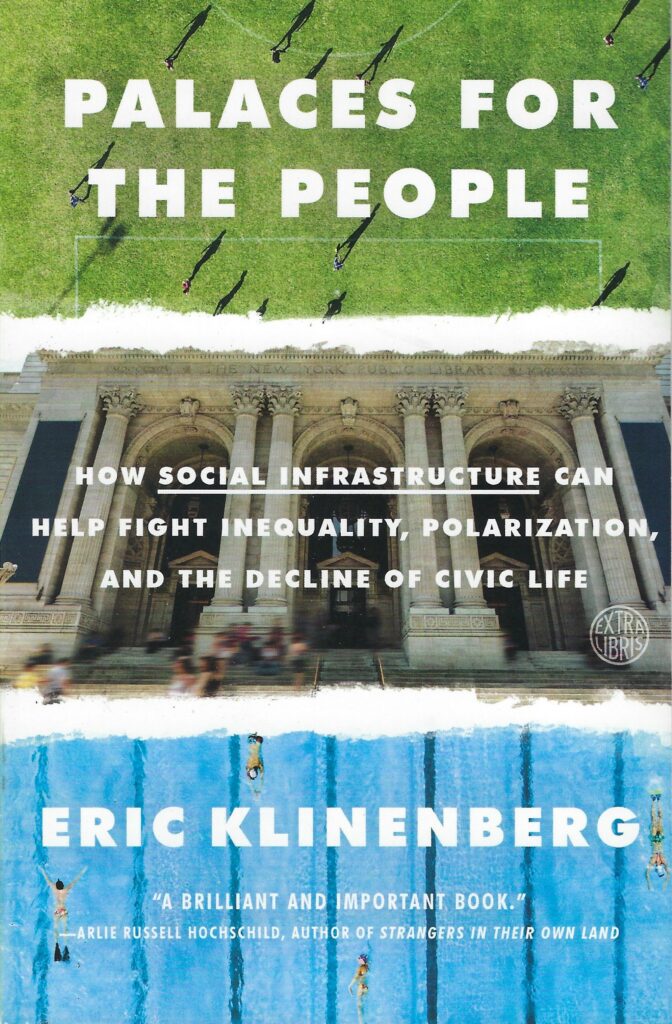
Palaces for the People is about the institutions that help a community come together and survive: libraries, pools, parks, gardens, and schools. These are all places that people can exist and be safe and get to know each other. When you can meet and discuss and not have to pay to do it. I work in a library and, as long as you’re not largely disruptive to other people or doing anything obviously illegal, we’re happy to have you.

We are, right now, in the middle of a pandemic and the racism that is pervasive in America is especially obvious. All of these institutions are closed and cannot help at the moment. I wish we could. I wish our library could be the place of respite and education that it is designed to be, that it should be. The lack of social infrastructure at the moment, at best, isn’t helping anything and may be actively hurting things. (Is it better for us to open and become a disease vector? What a terrible choice.)

If you are looking for a way forward, for examples of institutions that could help – help people find jobs, help people find community, help people learn more about the history of racism and possibly bring some optimism to you – Palaces for the People could be a building block.

Parisian Lives

I was so happy to see that Parisian Lives was a finalist for the Pulitzer Prize. I really enjoyed this book, to the point that I now want to read her biographies, so I was glad to see it get recognized.

Deirdre Bair is a biographer and a mother and an academic and a wife and works her ass off to have it all on the East Coast and in Europe during the 1970s and 1980s. That’s the color of the book; it’s always happening in the background. The meat of the book is her research and meetings while she was writing her biographies on Samuel Beckett and Simone de Beauvoir. The color of their personalities comes through in this book, and I’m interested to learn more (including reading the biographies that Bair wrote).

In short: I enjoyed Parisian Lives, and if you’re at all interested in any of what I wrote above (Paris, existentialism, feminism), I would recommend it.

A love letter to 1981 NYC

If the first chapter of The Beastie Boys Book is a love letter to Adam Yauch, the second (titled: Beastie Revolution) is a love letter to 1981 New York City from Luc Sante. He describes a romantic vision of being a punk kid from a poor, forgotten city that is full of music. It is immersive and beautiful and you can feel the raw energy of a place that’s about to burst (re-burst?) back into America’s consciousness.

A clip from the kindle version, showing a stage that’s about to be vandalized by the crowd.

I think I listened to the author-read version of this chapter like three times and read it at least twice. There are too many bands to name, too many artists, all people who lived on the edge of society and could make a living as a poor artist because living in NYC was cheap.

If you want to fall in love with New York City and early rap and punk music, you could do worse than reading this chapter as a stand-alone essay.

An introduction

Before I get started: the kindle version of the Beastie Boys Book is only $1.99 right now. As much as I enjoy the audiobook, there are pictures and graphic design in the actual book that are also a goddamn delight. But it’s also almost $30 and a brick. So the $2 kindle version, read on the iPad, works pretty good.

There are almost no cultural touchpoints in Wild Card, the introduction to the Beastie Boys Book (with the exception of the Tibetan Freedom Concerts). But it’s a lovely tale of friendship between the three guys in The Beastie Boys, Michael Diamond (aka Mike D), Adam Yauch (aka MCA), and Adam Horovitz (aka Ad-Rock).

This chapter was written by Adam Horovitz, and it could have been Yauch’s eulogy (he passed away from throat cancer in 2014). His love for one of his best friends comes through in every sentence – from being amazed at him going off to go snowboarding after a 16-hour flight to Australia to him knowing how electric guitars worked to Yauch being a guy who always amazed Horovitz.

It’s a great, positive picture of male friendship, and it’s also super-moving. I want to have been Yauch’s friend after reading this chapter, and at the same time to be more like Yauch. He seems like he was a good person.

And that’s one of the things I really like about this book: the love. So much popular culture is about people being cool or angry with each other or making fun of something. This book is not that at all, and we need more love in the world.

It’s one of the reasons The Beastie Boys Book makes me so happy.

Um, hi

It’s been about three months since I posted anything, and four months since I posted regularly. I like posting regularly, but life sometimes gets in the way.

Life got in the way. I got in my own way. Reading got hard, I got burnt out, blah blah blah. These are explanations, not excuses.

But I got inspired. At least, a little tickle of something a couple of weeks ago. And now I need something that isn’t work and isn’t coronavirus to focus on.

So here it is: a chapter-by-chapter listen of The Beastie Boys audio book. Why? Partially because of the trailer for the upcoming Beastie Boys Story:

But I was never a huge fan of their music. I’m still not. But they are fantastic storytellers, and I love a good story.

This audio book, though. It’s SO GOOD. I listened to it last spring and I still regularly think about it. The 1980s and the 1990s were brought back to life.

So the intro credits: they’re read by Reverend Run from Run DMC. Run DMC is still the band who introduced Aerosmith to me. Their version of Walk This Way is the better one, IMHO.

Join me over the next few weeks, as I talk about and share of the various cultural touchpoints, music, and memories that this book brought to the forefront of my brain.

A further step in anxiety and mystery

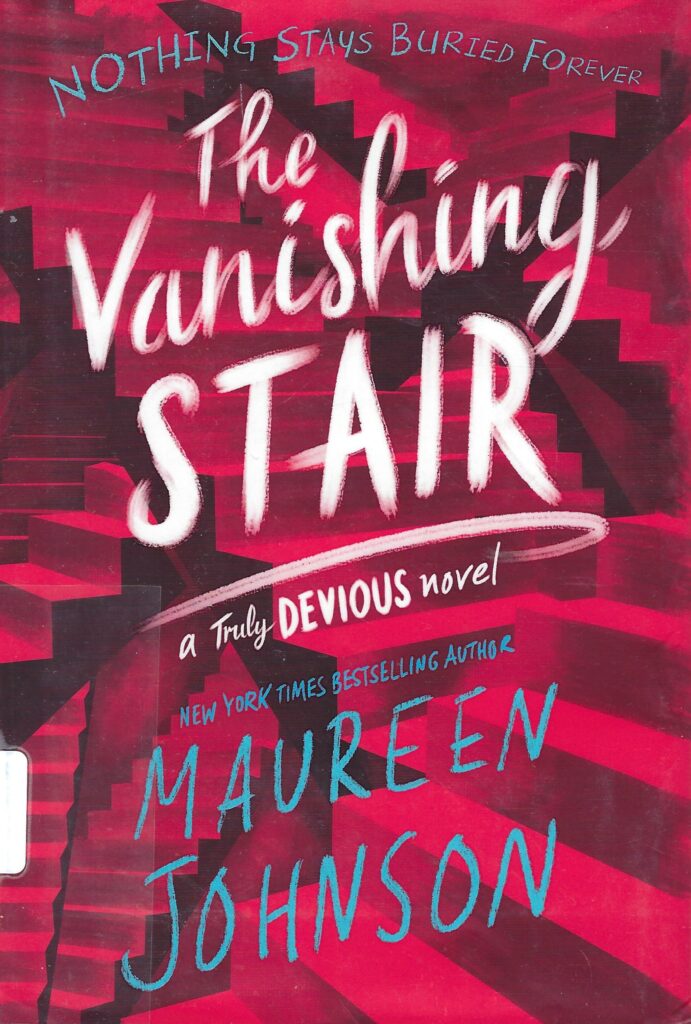
The Vanishing Stair is the second book in the Truly Devious series; they are not stand-alone books with three separate mysteries. The puzzle is spread across all three books in the series, and while there are smaller mysteries solved in the first two books, all the big answers are presumably going to be answered in the third and final book, due to be released in January 2020.

Stevie is a junior in high school attending Ellingham Academy, a prestigious private school in the Vermont Mountains. Ellingham was a prosperous industrialist whose wife and daughter were kidnapped in the 1930s. Stevie starts out working to solve that mystery: who did it, what happened to his daughter Alice who was never found. But that investigation triggers events in her own, current time period. The story is told both in the present time and as a string of events in the 1930s. The chapters are well marked so you know where you are in the two threads of the larger mystery.

Personally, Stevie’s anxiety speaks to me. It is part of her character, but that’s it: it’s just part of her character. It absolutely affects who she is and how she does things, but it’s not fetishized or presented as a problem to be solved. Writing anxious characters like that, who take their meds regularly and have therapists, normalizes them and makes it ok.

I’m still all in on this series and look forward to the next book coming out in January.

Book-length poetry

In Paris with You was a unique book for me, despite its somewhat formulaic romance plot (which isn’t a bad thing!). Why?

  • It’s translated from the original French, which means that the takes on the characters are different than you might get in a book originally in English. Specifically, Eugene is allowed to be slightly depressed, and that’s totally normal.
  • The hero is named Eugene.
  • It’s a book-length poem. I read poetry infrequently enough that the language that the authors uses is different enough, more emotional and less action-oriented, that it was refreshing.
  • It’s got a lovely happy-for-now ending that leaves open a proper happy ending.

In Paris with You was a great Sunday afternoon read. Would recommend.

A fizzy and happy romance

Royal Holiday was a fizzy delight of a romance novel, inspired by a combination of Meghan Markle’s mother, Doria Ragland, and the author’s own grandmother. In the book, Vivian, the mother of the main character in Guillory’s prior book, The Wedding Party, tags along on her daughter’s work trip over the Christmas holidays in London for the British royal family. There, she meets a retainer for the family, and they proceed to have a whirlwind romance. But alas, Vivian must go back to Oakland and her job. What does the future hold? (Spoiler: it’s a romance novel, so it’s required to have a happy ending.)

Royal Holiday was a fun read, and I was gratified to read a romance novel about a couple in their 50s. Love isn’t unique to those in their 20s! I enjoyed it and would recommend it.