Good vs evil makes a fun read

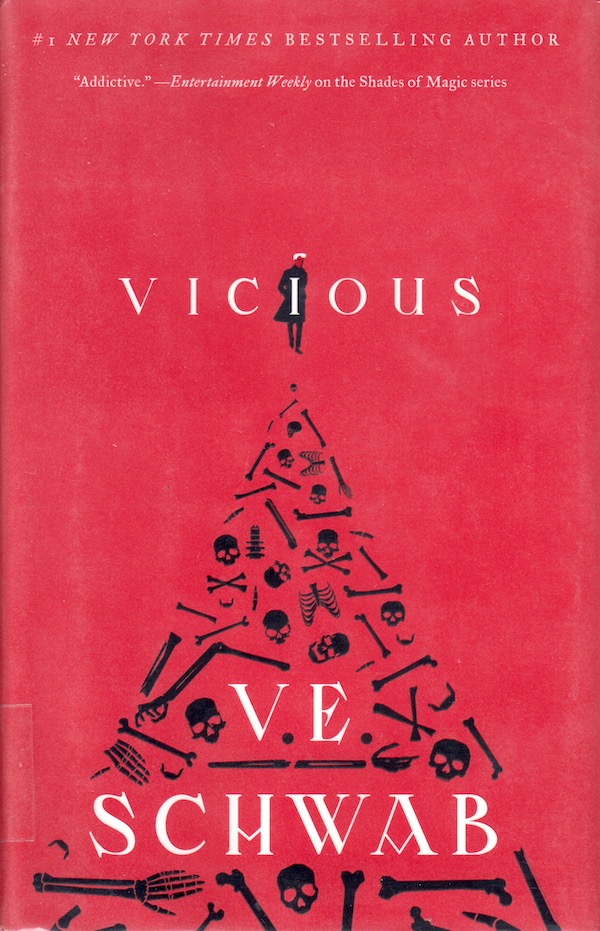
I totally read Vicious because I liked the Shades of Magic series. I liked Vicious, too – the idea behind the book is that superheroes exist and two college students (one of whom is named Victor Vale – an ideal comic book name) figure out how to turn themselves into superheroes. But something goes wrong and instead of becoming heroes, they become supervillains instead.

And that’s really all you need to know going into it. They’re friends and then they become supervillains and it’s a good story. It’s not intellectual, but it is fun and it invites you to think about the nature of good and evil, but only if you really want to.

Love, charm, and optimism

Becky Chambers writes charming science fiction novels that are primarily about all of the forms that love and family take, and Record of a Spaceborn Few is no exception.

Humans have long since left Earth and been integrated into Galactic society, but there are people who still live on the ships they first set out on, constantly improving and working on and changing those ships so people can continue to live comfortably on them. (And in a great touch: those ships are built from dismantled skyscrapers and other buildings and city structures from Earth – the Golden Gate Bridge or the Chrysler Building could be part of any ship.)

The plot comes from the fact that humans are relatively poor and technologically backwards and the Fleet is essentially that small town every teenager wants to leave for the big, exciting city. But there is also at least one person looking to come back, looking for a place to belong.

“All great literature is one of two stories; a man goes on a journey or a stranger comes to town.” – Tolstoy

(Not that the book is on par with Tolstoy, but the quote is relevant here.) Record of a Spaceborn Few is the story of the town and the people in it, full of warmth and love in many different forms. Definitely recommended.

Parenthood on Different Planets

Shortly after finishing The Long Way to a Small, Angry Planet, I decided to see if Becky Chambers had any other books – A Closed and Common Orbit is the sequel (and there’s a third! coming out sometime next year! I’m excited!).

A Closed and Common Orbit has strong themes around parenthood, specifically motherhood, and about what it means to be human. There are two parallel storylines. First, in the past Pepper is one of many human girls who clean up trash for reuse and recycling, at least until she escapes; how she makes it off the world she lives on, who takes care of her, all of that. Second, in the present day, Pepper is doing something highly illegal: taking an AI who’s meant to be running a ship and put it into a human (robot) body. Her name is Sidra; how Sidra perceives the world and interacts with it and adjusts, that’s this story.

The chapters interweave, letting you see how both are forming who they are and how they react to their very different worlds. This is different form than the essentially short-story collection of The Long Way to a Small, Angry Planet, and it works.

This is a universe I love, and you so rarely get good science fiction that focuses on women. It’s all the more precious for that.

Recommended.

Magic v Technology: who will win?

All the birds in the sky

All the Birds in the Sky was, for me, a tightly written three-act near-future novel about the clash of technology and magic (read: nature). I really enjoyed it.

There are two middle school aged children, Patricia and Laurence, and they are both freaks in that special middle school way. They almost become friends before they go their separate ways. As adults, they meet up in near-future San Francisco. Laurence is part of a tech incubator whose goal is to reach other planets sooner rather than later. Patricia is helping her fellow people via healing magic. The world is falling apart, and that accelerates. Clearly, humanity needs saving; will it be technology that will get us to the other world(s) before this one is destroyed or will it be magic that fixes it all?

This book is very much A Good Thing and worth your entertainment time.

Time travel + Ancient Rome = this book is for me

New Pompeii

New Pompeii is a science fiction book whereby a quasi-evil corporation uses its newly found time travel abilities to pull forward a large group of Pompeiians right before Vesuvius’ eruption covers the city in ash. (Forget the fact that Pliny documents how the city’s inhabitants fled en masse – that’s waved away with a sentence or two.)

It’s a completely serviceable, readable book that was catnip to me because I love reading about both Ancient Rome and time travel. It is not a great book, but I found a number of little touches well done: the Pompeiians wondering why are the carrots orange; the modern folks noticing how disfigured all the ancients are (health care was a lot different); the Romans living up to their world-conquering reputation. (Ok, that last one’s not so little.)

I’m not sure the plot resolution holds together; but: time travel. It almost never makes sense. I found it to be a fine book, your milage may vary.

The definition of a summer read

Last call at the nightshade lounge

Last Call at the Nightshade Lounge is a ridiculous book. Demon-fighting bartenders who get superpowers from perfectly mixed drinks? Ridiculous. A Long Island iced tea being the perfect drink the give you maximum superpowers (and possibly immortality)? Ridiculous. A young woman’s parents, after pushing her to get a “real job” after she graduates from college suddenly being ok with her decision to be a bartender (they don’t know about the demon fighting)? Ridiculous.

I loved it.

It doesn’t take itself seriously, it’s fun, it reads relatively fast. It’s a great summer poolside read.

Zombies and conspiracies

Girl with all the gifts

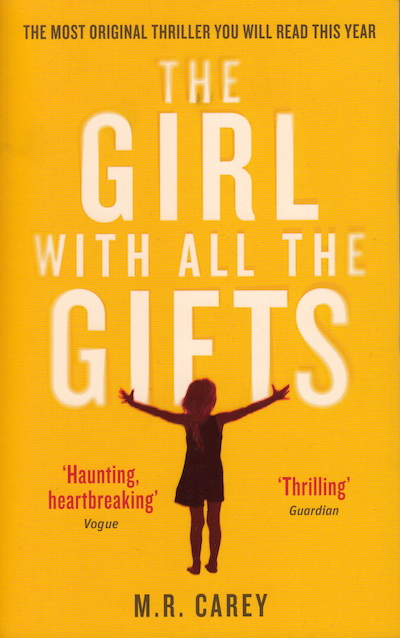
The Girl with All the Gifts was not for me. It’s point-of-view is from a super-intelligent girl who also happens to be some sort of zombie-like creature. It is after the zombie apocalypse, as far as I could tell, and what remains of the government has captured a number of young zombies to run experiments on. I got about fifty pages into the book and did not care. So I put it down.

Know what you’re getting into, and a rant about climate change

Seveneves

What’s it about?
Seveneves is about the end of the world. In short: something very odd happens and the moon breaks into seven chunks. At first, no one really realizes what’s going on, until the Neil DeGrasse Tyson character figures out that those chunks are going to keep hitting each other, breaking up, hitting each other some more, keep falling to Earth and causing lots and lots of damage. Thus ending the human race. So how do we react? What do we do? How do we use our current space technology? How do we use our other technology?

Why should you read it?
The book above sounds kind of interesting and problem-solve-y, right? Too bad it wasn’t what I thought I was getting into. I thought it was: the world ends in the first two chapters, and the substance is going to be about rebuilding the world. Nope. Not in the slightest.

I would never have picked up Seveneves if I’d realized that it was about the breakdown of society instead of the rebuilding. I don’t like those kinds of books – society has all kinds of troubles already. It didn’t make me reflect on how the moon chunks hitting the Earth are like climate change and how people are (or aren’t) adapting to or planning for that. I read enough about the fights between countries and the politics of reducing carbon emissions and get frustrated by not being able to do enough.

Ultimately, it made me feel powerless and impotent. I wouldn’t be able to do anything if the world were ending (say, because of climate change). With the systems we have in place, with our old-school electrical grid and society formed around consumption (which still requires that we use carbon-based fuels to produce all that *stuff*), I can only do so much. The system needs to change – more electric cars, less consumption of stuff more of experiences and services, especially in the United States, communities need to be built around walking and biking, not around driving – and I can buy fewer things and get an electric car when my old one finally gets used enough to warrant replacing and maybe eventually move to a city where I don’t need a car. But that’s just me. There are over 7 billion people on the planet. I can only do so much.

I don’t like feeling powerless and impotent. So I put the book down. Maybe I’ll pick it up at a different time. Maybe not. We’ll see.