Real-world adventure

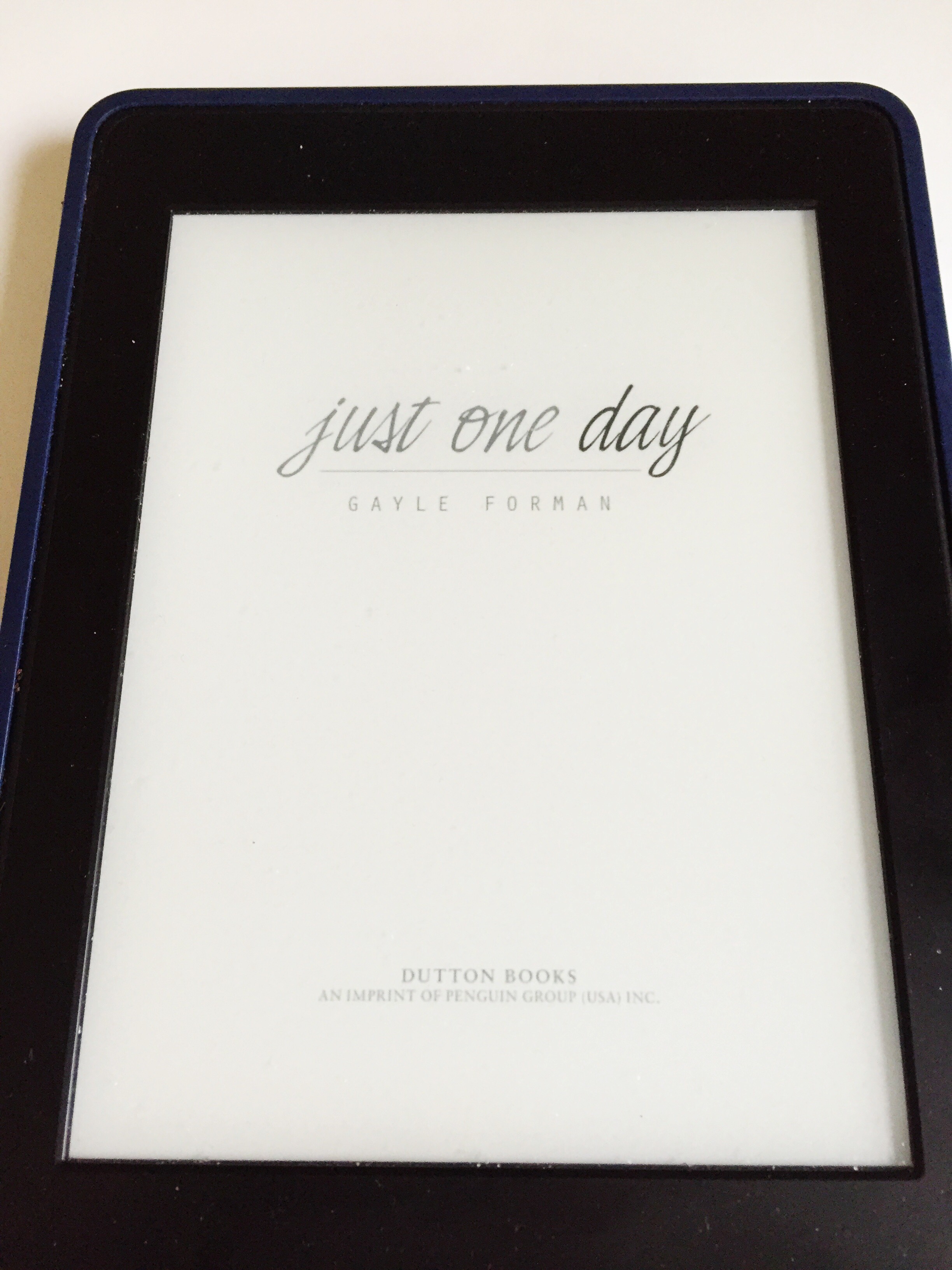
just one day


What’s it about?
Just One Day is a young adult novel about – what else – figuring out who you are. Plot-wise, it’s about a sheltered 18-year-old girl who travels to Europe with a tour group, meets a boy, runs off to Paris, and then he disappears on her. But it’s love, true love, and so she pines for him for awhile before getting off her butt and looking for him. It’s about how she grows as a person, figuring out who she wants to be, not just who her parents think she is.

Why should you read it?
It’s cute. I picked it up because I saw a recommendation online talking about what a brave person the main character is. And to a degree that’s true. She’s not running around in a war situation (the go-to male bravery experience), but she is getting out into the world, making decisions for herself, and that can be terrifying at 18/19. Just One Day provides a good template for how to do it responsibly.

Unreliable narrator

We Were Liars


What’s it about?
We Were Liars is a young adult book in the tradition of I Am the Cheese, where the narrator is as unsure of what’s going on as you are. Cadence comes from an upperclass New England family; they own their own island off Martha’s Vineyard. The family’s grandfather enjoys playing his three daughters off each other, making each of them compete for their slice of the family fortune. Something happens during Cadence’s 15th summer on the island. You’re never sure what exactly because Cadence has no memory of most of the summer. The book stays with Cadence as she recovers from whatever it was that happened.

Why should you read it?
I liked the feeling of suspense that We Were Liars used to show how uneasy everyone was and how truly messed up Cadence is. Cadence and the mystery are appropriately enigmatic. And you end up both sympathizing with the family and appalled by them. It was a quick read (which was good, given how quickly I needed to return the book to the library). Overall, I recommend it.

Getting into the meat of the mystery

Waistcoats and Weaponry

What’s it about?
Waistcoats & Weaponry follows up on Etiquette & Espionage and Curtsies & Conspiracies by furthering the plot of what exactly the macguffin is for. The macguffin in the series allows machines to transmit signals to other machines – something that could be used for either good or evil in a steampunk society. The mystery is which group is driving its production and what it will use it for. Waistcoats & Weaponry is diving into these questions as well as providing its usual fare of strong girls having adventures.

Why should you read it?
You should read it because the series continues to be a fun piece of work. Some of the class issues in Victorian England are brought to the forefront. Our heroine is flirting with both a viscount and a “sootie” – someone who feeds coal into the steam engines that everything needs to run in a steampunk world. She clearly prefers the sootie, but he knows that they cannot be together precisely because of his station in life. It’s handled very practically, I thought, for something that could be terribly dramatic. Overall, another good read.

Sometimes a strong heroine having an adventure is enough

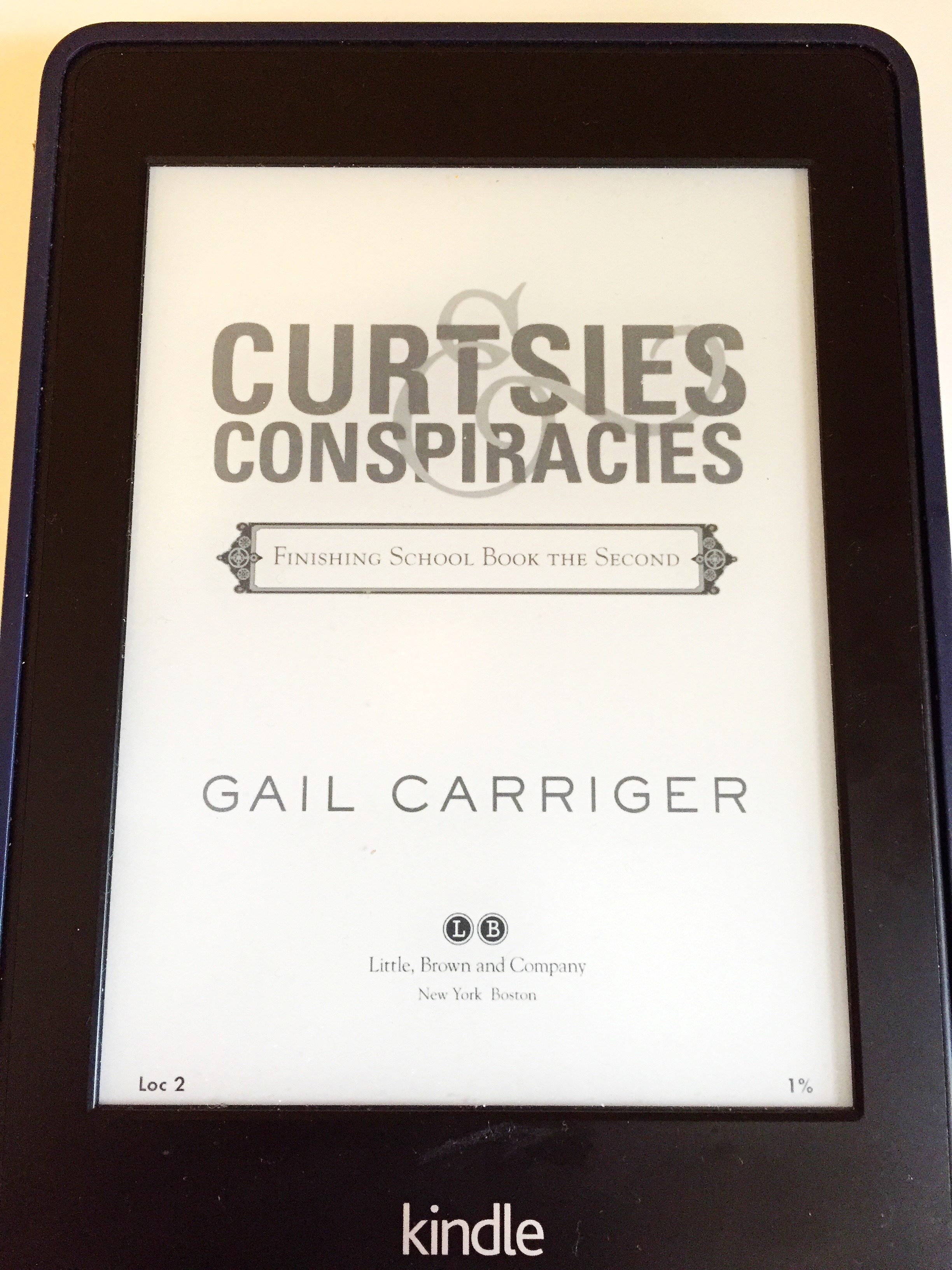
curtsies & conspiracies

What’s it about?
Curtsies and Conspiracies is about nothing, but that’s ok. I mean, there was a plot – the macguffin from Etiquette & Espionage is elaborated on and there are some interesting embellishments on  vampire culture in alternate steampunk Victorian Britain. But otherwise? It’s still about the setting: a young girl at a finishing school, having adventures.

Why should you read it?
Because it’s the sequel to Etiquette & Espionage and you didn’t want that one to end. That’s why you should read it. You do also learn the identity of the handsome rake the main character danced with at her sister’s coming out ball. That said, this book is definitely a sequel – it doesn’t stand on its own. But it’s a good continuation.

It’s never as black and white as you think it is

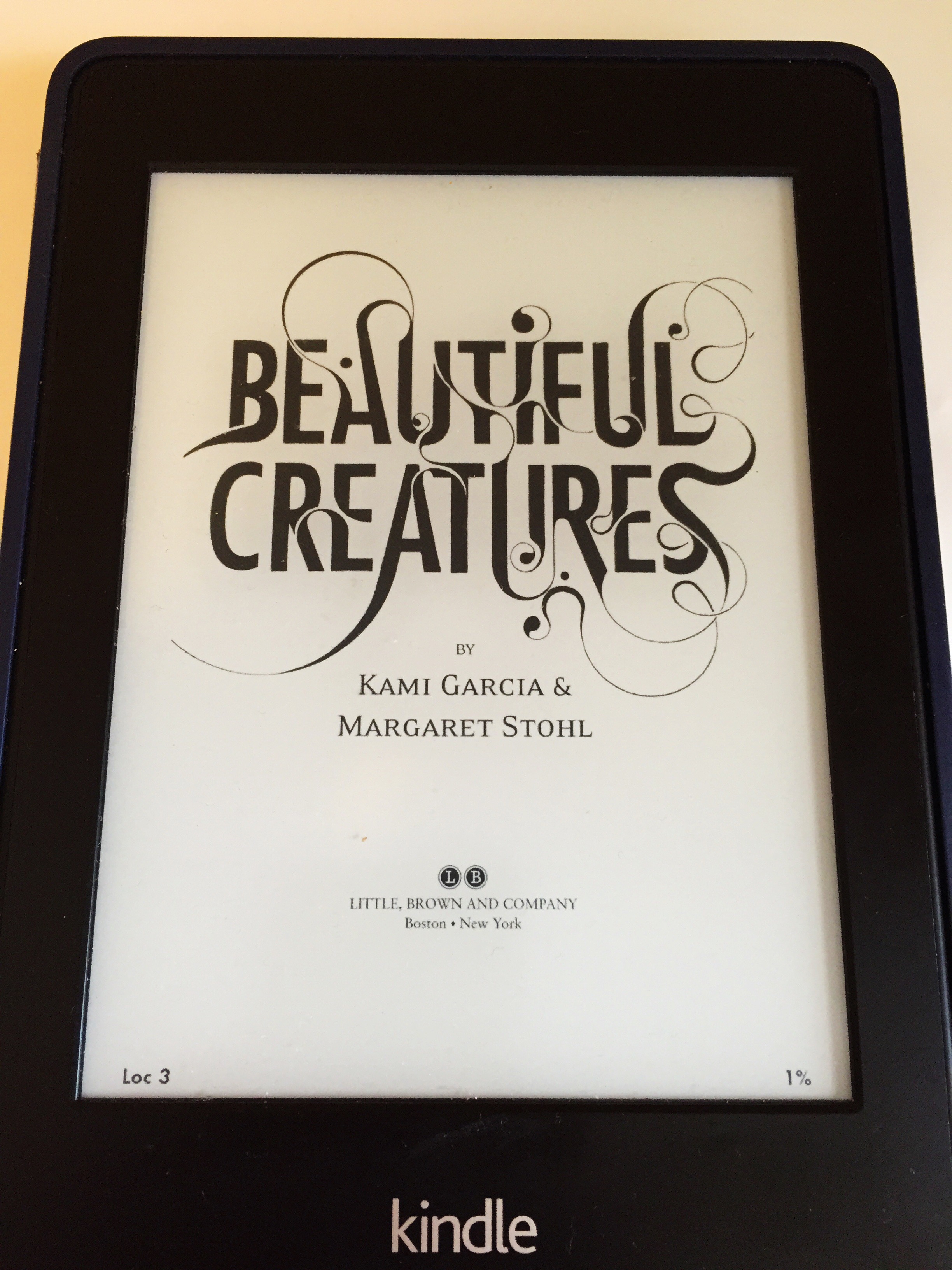
beautiful creatures

What’s it about?
Beautiful Creatures is about a very weird girl, Lena Duchannes, in a very conformist small town. It’s told from the perspective of Ethan Wate, a local boy who is instantly taken with her. Lena is magical and will be chosen to be either Light/Good or Dark/Evil on her sixteenth birthday. It’s all or nothing in this particular world. Lena and Ethan use their cunning and her powers to attempt to ensure that she will not go Dark.

Why should you read it?
Honestly, I wouldn’t. It wasn’t a do-not-finish for me, but it’s heavy-handed. Making your main character an instant outsider (like Lena) or an insider-who’s-hiding-his-outsiderness (like Ethan) is a great way to make your literary reader identify with them. It feels like a cliche. And then there’s the whole dark-light magical thing. The world only feels like it’s black and white; it’s really full of gray. The grayness is not as revolutionary as Beautiful Creatures wants it to be. It’s the first in a series I won’t be continuing.

Proper manners and adventure, thank you very much

Etiquette Espionage cropped

What’s it about?
Etiquette and Espionage is about a fourteen-year-old girl in an alternate steampunk Victorian universe. She is, of course, uncouth and adventuresome. She also, of course, gets sent to a finishing school to become a proper young lady. Said finishing school will also teach her to be a spy and assassin. There’s a macguffin being chased to provide a plot, but this one’s mostly about the setting.

Why should you read it?
It’s charming! It doesn’t take itself seriously (there are werewolves in top hats for crying out loud) and it has a sense of humor. Plus, I am always a fan of young women taking control of their lives. The only major theme that should be called out is: appearances matter. What you look like makes a difference. It’s presented, though, as a tool: if you want people to think you are from the country (as opposed to the city) you shouldn’t be wearing the latest fashions. If you dress like a slob, people will make assumptions about your competence. Form is function, to a degree. This doesn’t detract from the book’s appeal though – there’s no objectification going on, and it fits nicely. Overall, a winner.

Telling tales

cruel beauty

What’s it about?
Cruel Beauty is a retelling of beauty and the beast, though the beauty isn’t very ladylike or proper. But that’s ok because I don’t think many people will identify or enjoy a main character who is ladylike or proper. The setting is a magical island that has been cut off from the rest of the world. Literally – there’s a barrier that even blocks out the sun. A girl has been promised to the beast. The book begins with her marrying him in abstentia – she’s there, he’s not – and then heading to his castle. They don’t spend that much time together, but there is a mystery to be solved and an adventure to be had.

Why should you read it?
It’s a fun quest story, that’s why. Fairy tales retold are the fashion these days (wow, there’s a sentence that makes me sound like my grandmother). Cruel Beauty turns Beauty and the Beast into a more overt quest than it is – the beauty leaves/chooses to go to the beast’s castle, he takes her captive, they become friends, then they figure out what made the beast turn ugly, fix the problem/fall in love, watch as he becomes not a beast, and they live happily ever after. This story emphasizes the fix the problem part of the story. It’s fun. Definitely recommended for when you want something light.

Book club for teenagers

looking for alaska

What’s it about?
Looking for Alaska is a young adult novel about a boy who goes to boarding school and makes some friends, plans some pranks, falls into what might be love (or might be lust) with a girl named Alaska who already has a boyfriend, and generally deals with growing up.

Why should you read it?
Looking for Alaska is realistic fiction about being a teenager; about feeling like you don’t fit in; and also about death and grieving. It’s well-written and sensitive without being overly touchy-feely. And given that there’s a reading guide written by the author in the back of the book, it’s apparently also widely taught in schools these days. Perhaps it takes the place of A Separate Peace? They feel like similar stories to me. I enjoyed it.

A cute distraction

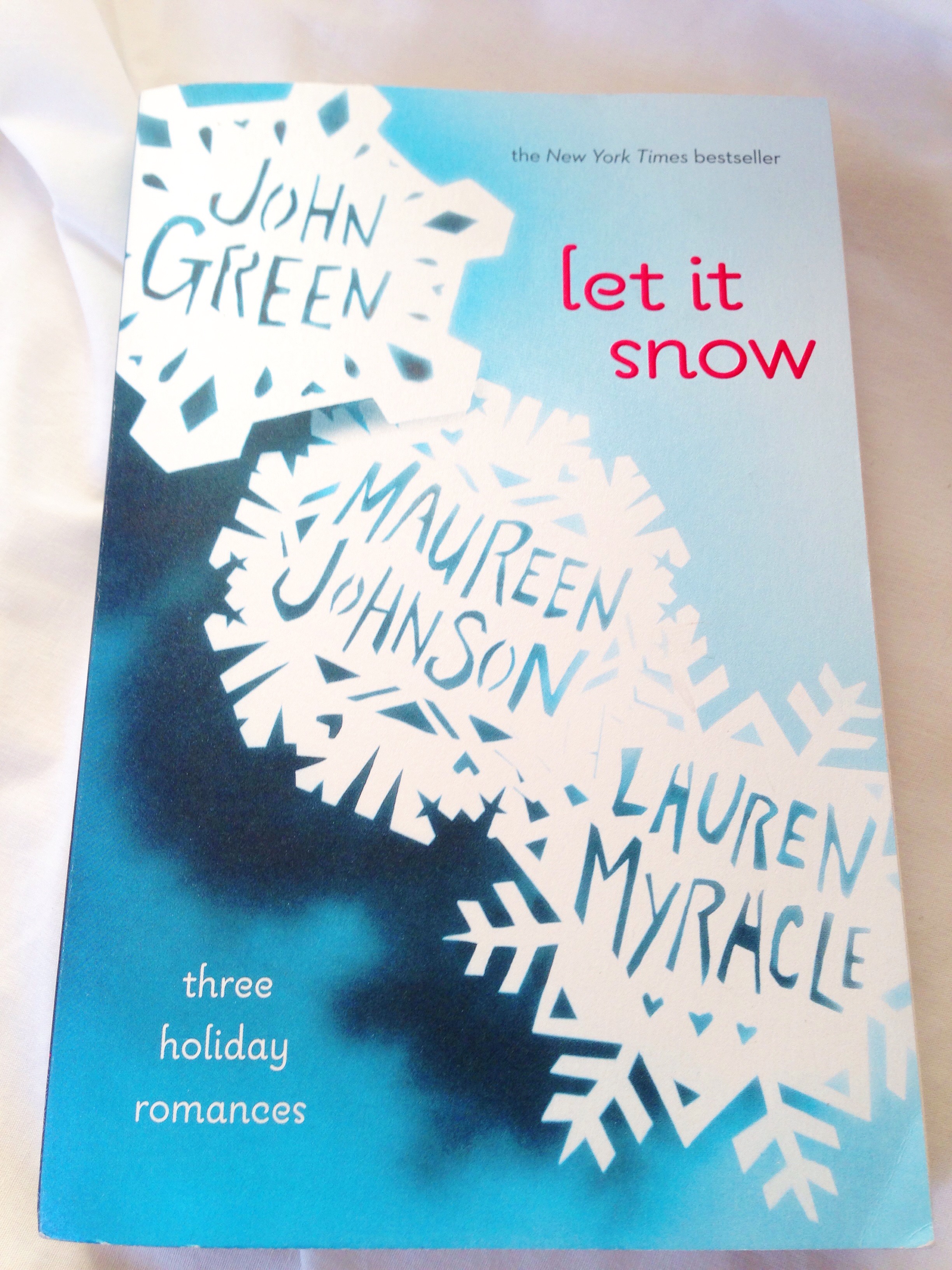
Let It Snow

What’s it about?
Let It Snow is three stories/novellas that focus on different characters that are all tangentially related to each other. The through-line of all three stories is that there is a snowstorm. A train gets stuck in a snowdrift. A teenaged girl, a teenaged boy, and a group of cheerleaders all leave the train to go to the nearby Waffle House. The first story is about the teenaged girl (written by Maureen Johnson), the second story is about friends of the  Waffle House employees (written by John Green), and the last story is about the teenaged boy (written by Lauren Myracle).

Why Should You Read It?
Because you need brain candy. I tossed this one off quickly while I had a cold and only a little brainpower. My tween-aged daughter enjoyed it, but I don’t think will be re-reading it like she does her favorite books. Still: an adorable distraction.

We’re all so perfectly perfect

Princesses of Iowa

What’s it about?
The Princesses of Iowa is about teenagers, growing up. Isn’t that the core of most YA? Paige, our main character, is a princess, has always been a princess, and if her parents and friends have their way, will always be a princess. She will always look perfect and she will always get straight As. She will marry her similarly perfect boyfriend – after they finish college of course – and they will go on living perfectly perfect lives. Except of course that’s not how life works. There’s a car accident before the book even starts; The Princesses of Iowa deals with the fallout. One of the princesses ends up with a permanent limp, another becomes a bit of a crusader, and our Paige somehow manages to escape almost all the consequences. Except that she’s not happy and she doesn’t see what everyone else has been going through. You really don’t like her – and I don’t think you’re supposed to – for most of the book. But there is character growth at the end, and she does grow up and figure things out.

Why should you read it?
It’s a lovely little meditation on what growing up means. It’s not gaining power or responsibilities or being the  most popular. It’s knowing who you are and how your actions affect other people. Growing up is an ongoing process. It never finishes. We’re always changing and learning more about ourselves and the people around us. I think that’s why well-written YA appeals to all ages – these are changes we all go through, at one point or another. Sometimes, it’s nice to reflect on it.