A story

The Little Paris Bookshop

In lieu of a review for The Little Paris Bookshop, I’m going to tell you a story. There’s nothing particularly unique about it. But it has Paris and death, and so does this book.

Once upon a time (in 1997) a young woman of 22 was backpacking across Europe by herself. She had grown up in a college town and then gone to that college and she was desperate to have a major life experience or two outside her town. This trip was something she had been dreaming about for years. It would get her said experience. Nothing big happened, nothing dramatic. But there is something about ten weeks on the opposite side of the world from your family and friends to make a person grow up and figure out who they are. Especially when you’re 22.

Halfway through her ten-week trip, she got tired of being in a new city every few days, converting money (this was pre-Euro), finding a place to sleep, and making new friends. She’d stayed a couple of nights at a hostel in Paris where there were some long-term tenants. She was going back there.

She enjoyed Paris, much to her surprise. She’d been there previously and found it dirty and gray and not at all the shiny romantic vision she’d been presented with in her high school French class. But this time, she hadn’t been looking for shiny and romantic, and instead she found a city that was dynamic and had great beauty in places (but not everywhere, and the contrast made the lovely parts moreso) and had friendly students, many of whom were also confounded by the not-so-friendly French. A couple of them even got the local baker to actually return their smile after a few weeks.

She drank a lot of wine and read poetry for the first (and only?) time in her life.

After she came back to the States, she went to graduate school. She moved away from home, away from the town she grew up in. A few weeks afterwards, she got a phone call: her mother had died in a car accident. She was devastated. She drank too much and made unwise late night phone calls.

She cried – a good friend called her one night and she was crying but happy about it because it was the first time in months that she could see there would be a light at the end of the tunnel. That someday she wouldn’t be devastated that her mother was dead. Someday, it would be a scar, part of her life. She would never not miss her mother, but it would be a fact she could live with. An ugly part of her life that made her appreciate the beautiful parts that much more.

It’s not an especially remarkable story, but it is one that happened. And it is somehow reminiscent of The Little Paris Bookshop and its story of Paris and death and recovery.
 

Death and the family

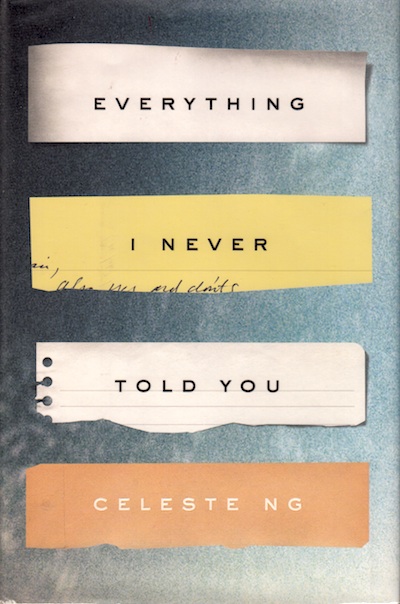
Everything I Never Told You

What’s it about?
It’s the 1970s, and a teenaged girl has died. Lydia Lee doesn’t come down for breakfast. Her family breaks a little bit. Her father, James, is the son of Chinese immigrants – he was the only Asian child in the small town in Iowa where he grew up; his family is the only Asian family in small-town Ohio where they live now. Blond, white Marilyn grew up in a traditional home in Maryland – and was whip smart in science and was determined to be a doctor. In the 1960s. Instead, she gets pregnant with Lydia’s older brother, Nathan. So James and Marilyn get married – and Marilyn’s mother never speaks to her again. And then there’s Hannah, the littlest sister, who gets used to being an afterthought. How does Lydia’s death change them?

Why should you read it?
It’s an amazing character study. Very little actually happens in the main plot line of the book: Lydia dies near the end of the school year, when we wrap up, it’s about six weeks later and everyone is mourning. How do they mourn? It depends very much on who they are and how they related to Lydia. James wanted Lydia to be popular and social. Marilyn wanted her to become a doctor. Nathan wanted to help her keep the family together. Hannah just wants someone to see her.

Everything I Never Told You is a lovely book. I’d highly recommend it.

Adulting

The One and Only

What’s it about?
Shea Walker loves football. LOVES it. She lives in small-town Texas, where she grew up, best friends with the college football coach’s daughter, Lucy. When Lucy’s mother dies (right at the beginning of the book) Shea starts to look at her easy life. She gets kicks in the pants along the way from her loving family and friends, too. It’s not just her.

Why should you read it? 
Emily Giffin writes books that take a romantic structure (Shea has three different boyfriends through the novel) and turns it into the protagonist figuring out who she is. It’s a thing that’s shared with some of the better YA books, even though the main character in this one is 33. She’s living in an extended adolescence – it’s time for her to grow up. The One and Only is Shea figuring out how to grow up, and who she is as an adult.

Not a murder mystery

The Husband's Secret

What’s it about?
The Husband’s Secret is about a crime that was committed twenty years ago. A teenaged girl was murdered, the killer was never found. This story is told in the present day, from three different points of view: her mother’s, Caecila Fitzpatrick (a super-organized mom whose husband has the titular secret), and Tess O’Leary (whose husband and best friend have just decided to have an affair). It’s a rich story, not only about the murder, but that’s the impetus driving all the action forward.

Why should you read it? 
I love Liane Moriarty’s books. She takes suburban parenthood and uses its typical situations to explore questions of humanity. Issues like fidelity and loyalty and grief all come to the forefront of this book. It’s definitely a page-turner (I think I read it in a matter of hours), and good for a vacation as well as for raising larger issues – if you choose to think about them.

Sharing everything….

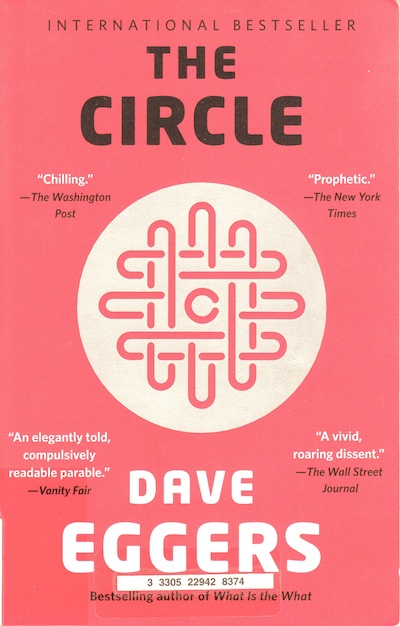
The Circle

What’s it about?
The Circle is about a woman, Mae, who goes to work for a company called The Circle. It’s what Google would be if it combined with Facebook and then everyone was eager to share everything about their worlds online. The founder of the company just wanted to solve problems; one CEO they brought in was very shark-like in exploiting everything for profit; another genuinely believes that if you share everything, the world will be a better place. Mae drinks the kool-aid. She starts broadcasting everything about her life. As you might expect, it doesn’t all go well.

Why should you read it?
The Circle isn’t realistic, in the same way that 1984 isn’t realistic. Nineteen Eighty Four is a more effective dystopia – the horror of the all-seeing state is visceral in 1984. The all-seeing company of The Circle is equally horrifying by the end, but the book eases Mae into the company (and the reader, as the book is told from her point of view) and so you can kind of see where the company is coming from.  It doesn’t make it better, mind you. My main quibble is that the Mae portrayed at the beginning of the book wouldn’t simply be eased along the path. She would rebel at some of the more outlandish things along the way.

The book isn’t great, but it did make me think about social networking, narrative structure, and characters – is it realistic that Mae is so needy that she makes the decisions she does? To that end: good job, book.

Families and friends

saint anything

What’s it about?
Saint Anything is about a girl who feels invisible. Sydney is 16 and her older brother Peyton is a criminal. He’s handsome and troublesome and he occupies all their parents’ attention. So when he goes to jail for permanently disabling a boy, she’s ready to be done. With all of it. She switches schools and starts making new friends. Her parents only tangentially realize what’s going on with her – she’s always been the quiet, good one. Other than the school switch, their attention is still occupied by her brother. But when she starts figuring out who she is and making new friends, her parents (of course) only see the bad side of it, not the good. How do they go from here?

Why should you read it? 
Sarah Dessen has a great way of making everything relatable. Sydney is one of those kids who is quiet and will always fall through the cracks of a system because she is good at taking care of herself and not bothering others. But she needs to figure out who she is. These are not wild circumstances, she isn’t doing anything spectacular or amazing, other than standing up for herself. She could be your friend; in fact, you’d be proud to have her as your friend. She’d get you pizza (many of her new friends work in a pizza restaurant), help you with your homework, and you could help her have a little more fun. Overall, it’s a touching book.

Real world? What real world?

The Rosie Project


What’s it about?
The Rosie Project is a cute little beach read about a professor with Aspberger’s syndrome and his hunt for a mate. It’s told from his point of view; Rosie is a PhD student he crosses paths with. He starts to help with her project, and ends up having fun.

Why should you read it? 
You should read The Rosie Project on vacation somewhere, as a further distraction from the real world. It’s not going to change your life, but it will entertain you for a few hours. Sometimes, that’s exactly what you need. You can also admire the fact that it’s written with an autistic person as the main character – something you don’t find every day. (Diversity in fiction is important!)

All science, no philosophy

the remains of the day


What’s it about?
The movie version of The Remains of the Day is an elegant but sad love story between the butler and the housekeeper of an English estate between WWI and WWII. The butler’s uncompromising standards and obsession with his work doom their romantic relationship. The book version is an entirely different story. The attraction is still there, but it is secondary to the main plot. That story is about how the butler’s uncompromising standards and obsession with his work make him unable to hold his own opinions about literally anything else. Between the wars, some British, including the butler’s employer, Lord Darlingon, were trying to appease the Nazis. All the butler is able to do is go about his work. In this case, there is a conference between the Germans and the Brits in the house; it ends badly.

Why should you read it?
See, now this is a book about an awful yet sympathetic person that was a delight to read. Kazuo Ishiguro writes divinely, you sympathize with the butler who wants to do his job as best he can, and you see the German-British relationship for the tragedy it was. You might even mourn the end of the British Empire. While the book was entirely different than what I expected, I still enjoyed it.

Spoilers, sweetie

A God in Ruins

What’s it about?
A God in Ruins is a kind-of sequel to Life After Life. If you’ve read Life After Life, you might wonder how a follow-up could be possible. Before I read the book, my hypothesis was that she’d just chosen one of Ursula’s lives and gone with it. (However, my inability to remember what, exactly, happened to Teddy by the end of Life After Life was frustrating.) This book is about Teddy, Ursula’s younger brother. It’s a profile of his life, his wife’s, and their awful daughter. There are two grandchildren as well; they turn out ok. These are not spoilers – the book isn’t told in chronological order. In fact, there was a point towards the end of the book where I was wondering how on earth the grandchildren ended up as healthy as they were.

Why should you read it? 
Because Kate Atkinson is a good author. This is a wonderful story; it’s about so many things. Themes of nature and how the world changes in the 20th Century, personal choice, and how we think about our lives and the people in them. I would definitely recommend A God in Ruins to anyone who liked Life After Life.

Nostalgia is overrated

Going Vintage

What’s it about?
Going Vintage is about a young lady, Mallory, who’s adopted her boyfriend’s life as her own. Which is fine as far as it goes – she was new to the area and met and fell in love with him before she made a lot of other friends. It’s realistic if not particularly feminist. But then he cheats on her online. So she dumps him and goes fully retro: everything must be from the mid-60s. Mallory starts a pep club and hosts a dinner party and only wears her grandmother’s vintage outfits. Her helpful sister takes all of her technology away – she’s not allowed her phone or anything that wouldn’t have existed in the mid-1960’s. She rides her bike to get places and has to buy a fully corded phone. But it’s never portrayed as better – in fact, much of the time, it’s about how inconvenient life used to be.

Why should you read it?
The idea of comparing and contrasting life in the past with now is one that warms my heart. What was better before the internet? What was worse? I like that the author doesn’t sugar-coat the nostalgia, but I wish she hadn’t been quite so pessimistic. None of Mallory’s friends can figure out her phone number and call her? It’s like it was an excuse for the author to not flesh out any of those side characters.

That aside, it’s a cute story for anyone who likes a dose of YA, but you won’t remember it in two months.