Not my thing

china dolls by Lisa See


What’s it about?
China Dolls is about two Chinese young women and one Japanese young woman who wanted to be in show business in late 1930’s San Francisco. They are frenemies – they get along and support each other, but are also competing with each other. Eventually WWII comes along and the Japanese woman gets sent to an internment camp.

Why should you read it?
I wanted to read it because I wanted to know more about San Francisco and Chinatown. I enjoy history. But I set the book down after they got their first job and just couldn’t bring myself to pick it up again – I didn’t care enough about the characters. You might enjoy it – it wasn’t actively bad. But it wasn’t my thing.

Not glamorous

all fall down by Ally Carter


What’s it about?
All Fall Down is a story about an ambassador’s granddaughter, Grace. There has been an accident and her mother is dead. She, however, is convinced that it wasn’t an accident. But no one will believe her. How will she ever prove that there is more going on than meets the eye?

Why should you read it?
You should read it if you, like me, are an Ally Carter fan (the Gallagher Girls and Heist Society series are fun). Otherwise, I might give it a pass. Ms Carter is a practical person – it helps her write no-nonsense characters who are good at getting things done. But All Fall Down should be about glamour. There are grand balls, tuxedoes, gowns, and secret tunnels. There is diplomacy and doublespeak and old European cities. Grace should remind me a bit of James Bond; but she is damaged in a way that isn’t, to my mind, alluring. (Her mother is dead. It would be weird if she were normal.) There is a way to make a character damaged and still fascinating – La Femme Nikita comes to mind. Grace should be competent but off her game. Instead she just came across as blundering. I didn’t get the underlying competence.

I will read the sequel – I am sure Grace has underlying competence. This is an Ally Carter series. I look forward to Grace finding it.

Light and Dark

All the Light We Cannot See


What’s it about?
There are two main plot threads in All the Light We Cannot See. In the first, there’s a blind girl (Marie-Laure) living with her father (Monsieur LeBlanc) in Paris in the 1930s. The main things to know about them are: she’s smart, he’s a key master who is also great at building puzzle boxes. World War II comes, and they end up leaving Paris for Saint-Malo, a small bit of land that becomes an island at high tide. In the second, there’s an orphaned German boy (Werner) in the 1930s who builds radios. He loves building things in general and is entranced by radios in particular. He and his sister (Jutta) enjoy listening to a broadcast from France as children. He gets selected for a national school, run by the Nazis, because he is smart. He eventually gets sent to the front lines during WWII and ends up in Saint-Malo towards the end of the German occupation.

Why should you read it?
Well, in addition to being a National Book Awards Finalist and a NYTimes book of the year, All the Light We Cannot See also won a Pulitzer this week. So if you’re looking for an award-winning book, this one fits the bill nicely.

In addition to that, it is a gorgeously told story that made me get over my “really? heroes during WWII again?” skepticism. The characters are (mostly) richly created, the settings are amazing – you feel cold and wet when Werner is on the Russian front lines in WWII, and warm and loved when Marie-Laure is amongst her family in small town France. Really, it’s very well done.

A supernatural adventure

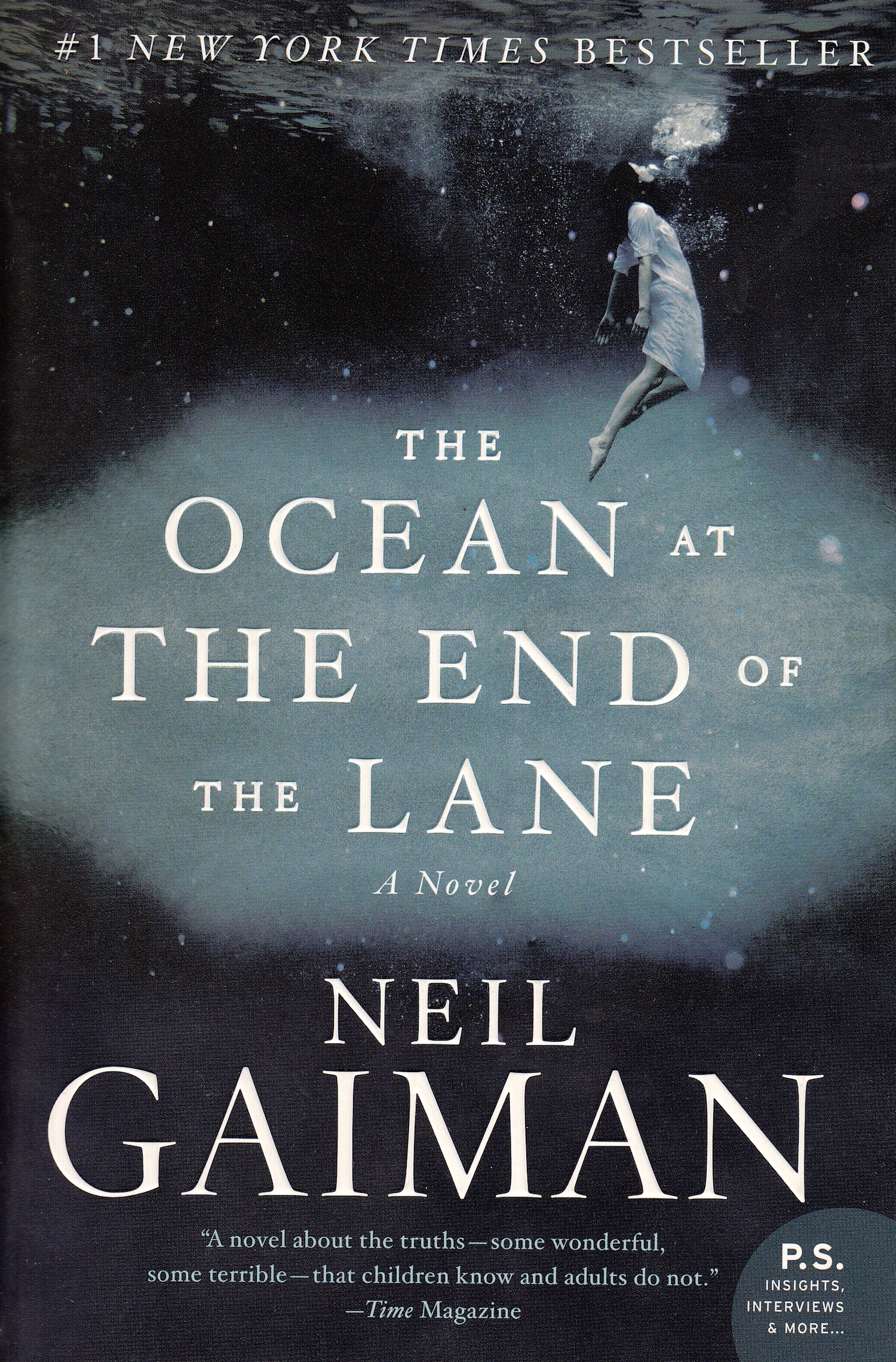
the ocean at the end of the lane


What’s it about?
The Ocean at the End of the Lane is a series of unfortunate events wherein a bookish boy ends up having a supernatural adventure. Someone dies, a monster from somewhere that isn’t here comes here and terrorizes our bookish boy. He eventually bests the monster with the help of his friends who have been around since the beginning of the universe. Or so it is implied. It’s also kind of about a sporty father who doesn’t understand his bookish son terribly well and the son’s coming to terms with that.

Why should you read it?
Gaiman writes beautifully and the story is well-told and shorter than I’d expected, honestly. It’s not super-deep or revelatory but it is a lovely little story that makes you care about the characters, with Gaiman’s characteristic oddnesses. It checks all the boxes.

It’s a fantasy book. Don’t tell.

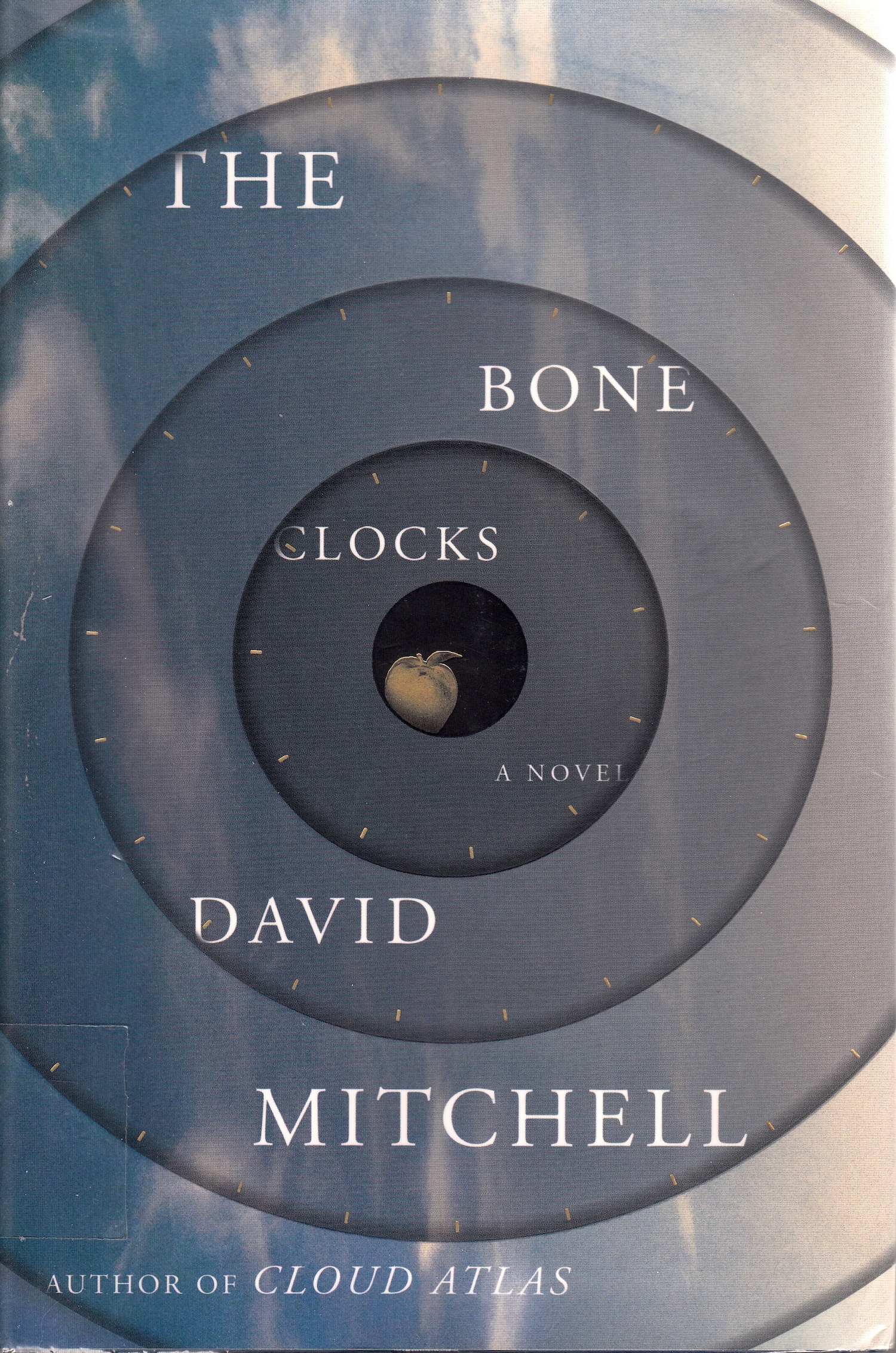
The Bone Clocks


What’s it about?
The Bone Clocks is about Holly, a girl who runs away from home when she’s fifteen. She’s gone for a weekend, but in that weekend her life changes. At the end of the book, she’s raising a granddaughter on the west coast of Ireland as civilization falls. She plays lots of roles and has lots of jobs in the interim, but she keeps running into a person named Marinus. There are fantasy elements in the book, and the story isn’t always told from Holly’s point of view. In some ways, it’s about ensuring that life goes on as the world falls apart.

Why should you read it?
Aside from the fact that it was long-listed for a Booker Prize (if you’re into that sort of thing)? It’s a compelling story. So often highbrow books are experiments in style or something else that makes them hard to read. The Bone Clocks isn’t that book. It’s a solid, well-told story about a woman navigating her family and her life in a fantasy setting. I’m happy this one hasn’t been shunted off in genre land and is getting the attention it deserves.

Eat your broccoli

A brief history of seven killings

What’s it about?
Plot-wise, A Brief History of Seven Killings is about Jamaica in the 1970s. It wasn’t a happy place. Two parties wanted to control the government. The CIA worried that the country would become communist, like Cuba. Gangs were aligned with both parties, full of not very nice people. The CIA was giving them guns. And Bob Marley was putting together a peace concert. There was a shooting at Marley’s home two days before the concert. This book posits what happened in the lead-up and in the fall-out to that shooting. Subject-wise, the book illustrates power relationships, what it’s like to live in a third-world country, how the CIA’s meddling in said countries screwed things up, and tries to pick apart why people do what they do.

Why should you read it?
An actual conversation with a friend yesterday:

me: Did you like Wolf Hall?
her: No.
me: Oh. Then you’ll hate this one.

Because, despite the differences between 1970’s Jamaica and Tudor England, the books are largely about the same things: power, how do people get power, how do they keep power. It is dense and not at all brief. It’s also very violent. It, at one point, made me wish I had an English degree so I could properly analyze it. It’s good and important and educational but it is not entertaining. And that’s ok. I’m glad I read it.

Surrealism is alive and well

Strange Library by Haruki MurakamWhat’s it about?
The Strange Library, I think, pretty solidly qualifies as surreal. There’s a shepherd who goes to the library, and he’s directed to the basement. He makes his book request to an elderly man in room 107, who brings him his books and then directs him to the reading room, through a maze and eventually to a jail cell. Once there, he’s told to memorize the books in 30 days or else. There’s a man who wears a sheep costume and a beautiful woman with no voice who bring him his meals. It’s odd.

Why should you read it?
If you’re getting shades of Kafka, I wouldn’t be surprised. Naked Lunch also popped into my head whilst reading it. There’s a hero, and he’s going on a quest, but he’s not really sure what’s going on and neither are you. Furthermore, there are some things said that make you question your narrator’s reliability. Could this all potentially be a dream? Yes. Could the hero be crazy? Abso-freaking-lutely. I wouldn’t call The Strange Library entertaining, but it gave my brain a nice little workout.


Cleopatra shouldn’t be boring

Hand of Isis

What’s it about?
Honestly, Hand of Isis was a did-not-finish for me. So, this is a summary to the point I finished. There are three daughters of the Pharaoh Ptolemy Auletes: Iras, Charmaine, and Cleopatra. Yes, that Cleopatra. She’s legitimate, the other two are daughters of slaves. They’re all half-sisters, rather than full. The two illegitimate daughters become Cleopatra’s handmaidens and we follow their education and exploits as Pompey the Great first defeats Egypt to take over Cyprus which leads to the downfall of the Pharaoh, which leads to various of Cleopatra’s siblings to take over the throne – she’s the third daughter and fifth child – which leads to a lot of moving around and power struggles.

Why should you read it?
I picked it up because I’m starting a side project about Cleopatra and I thought a fun historical novel would be a good way to get into the subject. However, even though I got about 100 pages into Hand of Isis, once I set it down, I never felt the pull to pick it up again. So it turned into a did-not-finish book because I have so many other books to read. Your milage might vary – it is the third in a series, so you might enjoy it for other reasons. But for me, it was just sort of meh.

Sometimes a strong heroine having an adventure is enough

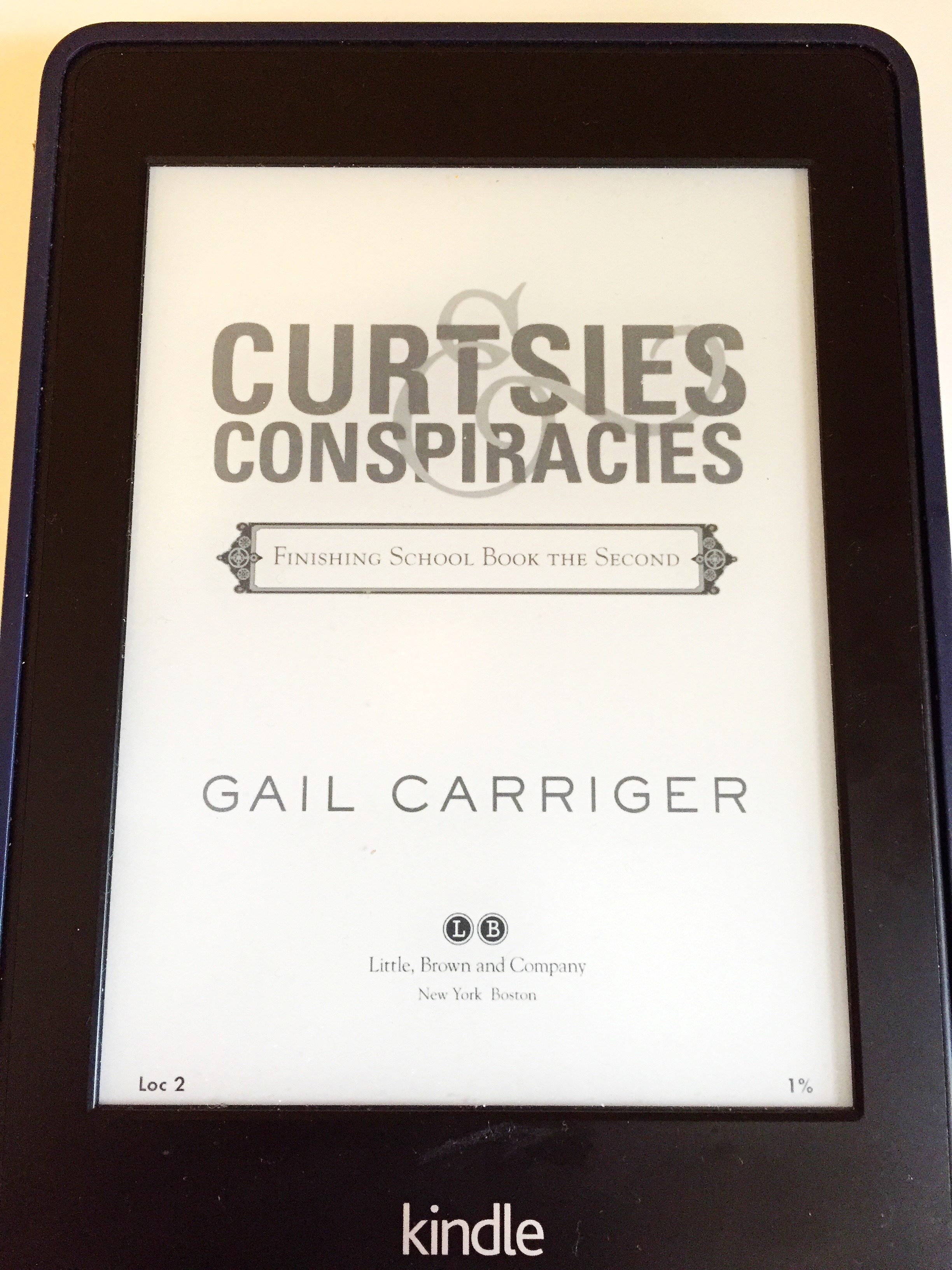
curtsies & conspiracies

What’s it about?
Curtsies and Conspiracies is about nothing, but that’s ok. I mean, there was a plot – the macguffin from Etiquette & Espionage is elaborated on and there are some interesting embellishments on  vampire culture in alternate steampunk Victorian Britain. But otherwise? It’s still about the setting: a young girl at a finishing school, having adventures.

Why should you read it?
Because it’s the sequel to Etiquette & Espionage and you didn’t want that one to end. That’s why you should read it. You do also learn the identity of the handsome rake the main character danced with at her sister’s coming out ball. That said, this book is definitely a sequel – it doesn’t stand on its own. But it’s a good continuation.

Rethink what winter symbolizes

The Snow Child

What’s it about?
The Snow Child is an expanded retelling of a Russian fairytale about a childless older couple who builds a snow girl one wintery night. The snow girl comes to life, but then gets too warm in the spring and  she melts. In this version, the older couple is homesteading in Alaska in the 1920s; they are estranged because they’re both bottling up their feelings about the fact that the only child they were ever able to conceive was stillborn. But once their snow girl, Faina, comes to life, they open up as well, with each other and their neighbors. Faina stays several years, disappearing in the summers. She grows up, and you start to think that maybe she’s not magical, maybe she’s just a girl (and then a young woman). Maybe.

Why should you read it?
Look, I almost put The Snow Child down in the first thirty or so pages, the language and symbolism was all about winter == old == death and depression. It was effective and I almost couldn’t take it. But get through that, and you’ll be rewarded with a tale about a family who learns to share their emotions and how to be friendly. They become fuller people through love, which sounds schlocky and sentimental but it’s done delicately and gracefully. The balance with winter white and sparseness and elegance is done well. Overall, a very good book.