Proper manners and adventure, thank you very much

Etiquette Espionage cropped

What’s it about?
Etiquette and Espionage is about a fourteen-year-old girl in an alternate steampunk Victorian universe. She is, of course, uncouth and adventuresome. She also, of course, gets sent to a finishing school to become a proper young lady. Said finishing school will also teach her to be a spy and assassin. There’s a macguffin being chased to provide a plot, but this one’s mostly about the setting.

Why should you read it?
It’s charming! It doesn’t take itself seriously (there are werewolves in top hats for crying out loud) and it has a sense of humor. Plus, I am always a fan of young women taking control of their lives. The only major theme that should be called out is: appearances matter. What you look like makes a difference. It’s presented, though, as a tool: if you want people to think you are from the country (as opposed to the city) you shouldn’t be wearing the latest fashions. If you dress like a slob, people will make assumptions about your competence. Form is function, to a degree. This doesn’t detract from the book’s appeal though – there’s no objectification going on, and it fits nicely. Overall, a winner.

Telling tales

cruel beauty

What’s it about?
Cruel Beauty is a retelling of beauty and the beast, though the beauty isn’t very ladylike or proper. But that’s ok because I don’t think many people will identify or enjoy a main character who is ladylike or proper. The setting is a magical island that has been cut off from the rest of the world. Literally – there’s a barrier that even blocks out the sun. A girl has been promised to the beast. The book begins with her marrying him in abstentia – she’s there, he’s not – and then heading to his castle. They don’t spend that much time together, but there is a mystery to be solved and an adventure to be had.

Why should you read it?
It’s a fun quest story, that’s why. Fairy tales retold are the fashion these days (wow, there’s a sentence that makes me sound like my grandmother). Cruel Beauty turns Beauty and the Beast into a more overt quest than it is – the beauty leaves/chooses to go to the beast’s castle, he takes her captive, they become friends, then they figure out what made the beast turn ugly, fix the problem/fall in love, watch as he becomes not a beast, and they live happily ever after. This story emphasizes the fix the problem part of the story. It’s fun. Definitely recommended for when you want something light.

More mystery than murder

big little lies

What’s it about?
Big Little Lies is a murder mystery in that someone dies and the story is ultimately about putting the world back together. But it’s not structured like a typical mystery: the death isn’t until almost the end, and the world keeps getting messier and messier until suddenly it’s not messy at all. It’s about a group of parents who all know each other because their children all go to kindergarten together, and how they all relate. It’s not a heavy book, but I was expecting something even lighter going in. (I blame the cover.)

Why should you read it?
It’s a good story, that’s why. It’s well told, it’s gripping (I stayed up late to finish it), and it made fun of school politics from the parents’ point of view. School politics always deserve to be made fun of. I like this trend of writing more books aimed at working parents that treat the parents as people who both love their children and want to have lives of their own. I’m avoiding writing about the murder mystery part of the book because I don’t want to spoil it, because I suspect many people will read it. It’s very well done.

Introducing Afghanistan

the kite runner

What’s it about?
The Kite Runner is about Afghanistan. It was, I think, written to personalize Afghanistan to America, by an Afghani immigrant to the US. It was published in the year after 9/11, I’m sure because there was such a voracious appetite for any information about Afghanistan at that time. The story in the book is about a boy, Amir, and his servant boy growing up together; they are separated by a tragedy that Amir does his best to make up for as an adult.

Why should you read it?
It really does serve as an introduction to Afghanistan to a Western audience. Is it sanitized/caricatured for Western eyes? Probably. But introductions are often like that. There are also some clunky metaphor moments (it is Khaled Hosseini’s first novel), but it is overall a good story. The main character isn’t particularly likable – which is a whole other debate, should characters be likable? – but I was moved by the overall story. In a good way.

Look, The Kite Runner was incredibly significant when it first came out – there were no common Afghani-American stories available. This is a lovely introduction to the country and the culture.

Book club for teenagers

looking for alaska

What’s it about?
Looking for Alaska is a young adult novel about a boy who goes to boarding school and makes some friends, plans some pranks, falls into what might be love (or might be lust) with a girl named Alaska who already has a boyfriend, and generally deals with growing up.

Why should you read it?
Looking for Alaska is realistic fiction about being a teenager; about feeling like you don’t fit in; and also about death and grieving. It’s well-written and sensitive without being overly touchy-feely. And given that there’s a reading guide written by the author in the back of the book, it’s apparently also widely taught in schools these days. Perhaps it takes the place of A Separate Peace? They feel like similar stories to me. I enjoyed it.

Skippable

extremely loud & incredibly close

What’s it about?
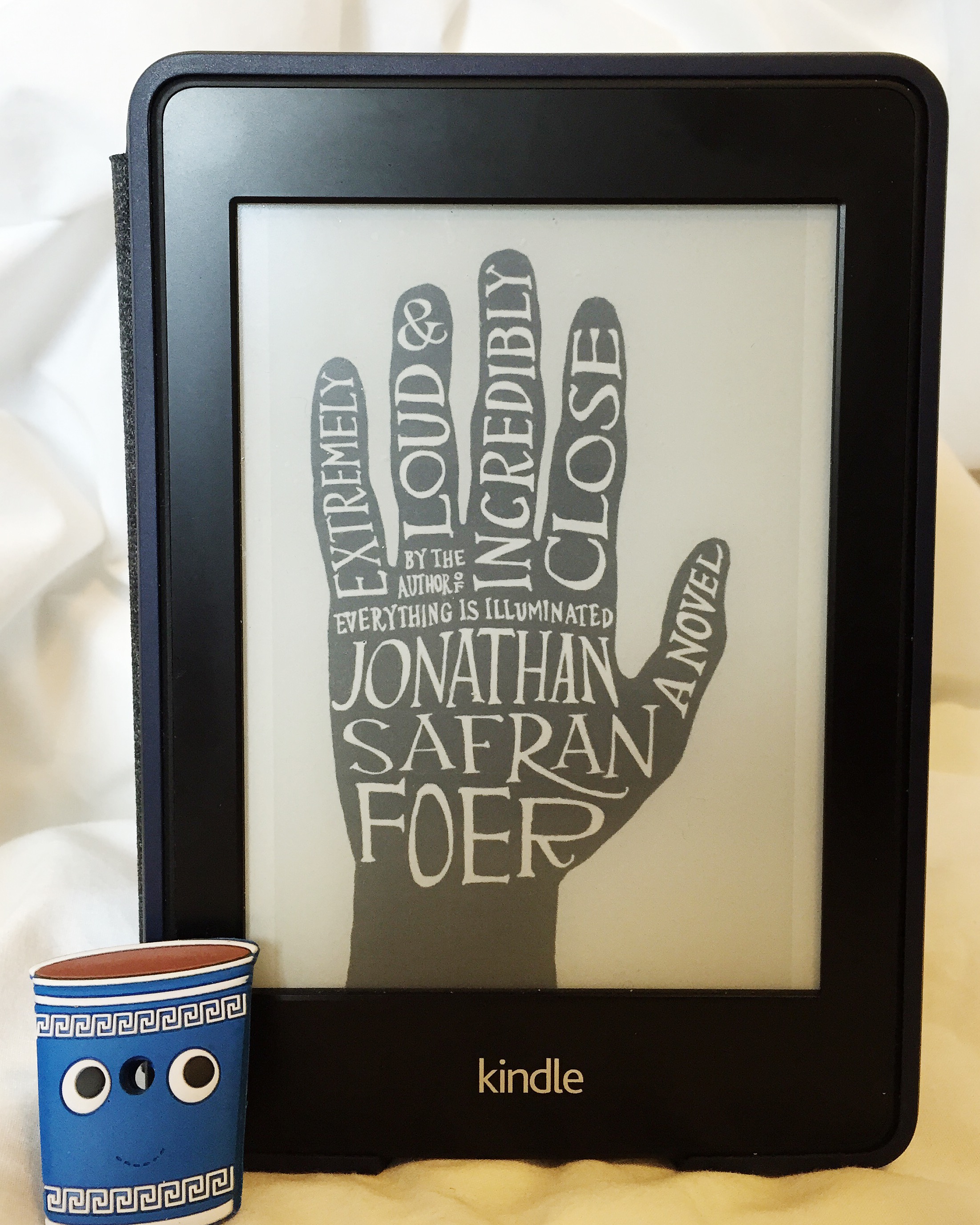
Extremely Loud & Incredibly Close is about a boy whose father is killed in the 9/11 attacks on the World Trade Center in NYC. He’s gifted and a little weird and has a mother who is seemingly completely uninterested in him. Or maybe he’s just uninterested in his mother. He was certainly closer to his father. He’s going on a quest to solve a mystery he thinks his father left him.

Why should you read it?
Don’t. At least, I couldn’t. I couldn’t get over the odd writing style – meant to convey the main character’s high intelligence and immaturity, but I found it distracting. I also couldn’t get over the mother’s seeming disinterest in her son. I get that she wanted to let him grieve in his own way, and I also get that he was pushing her away. But to be so completely disconnected? No.

Wuv. Tru wuv….

Landline

What’s it about?
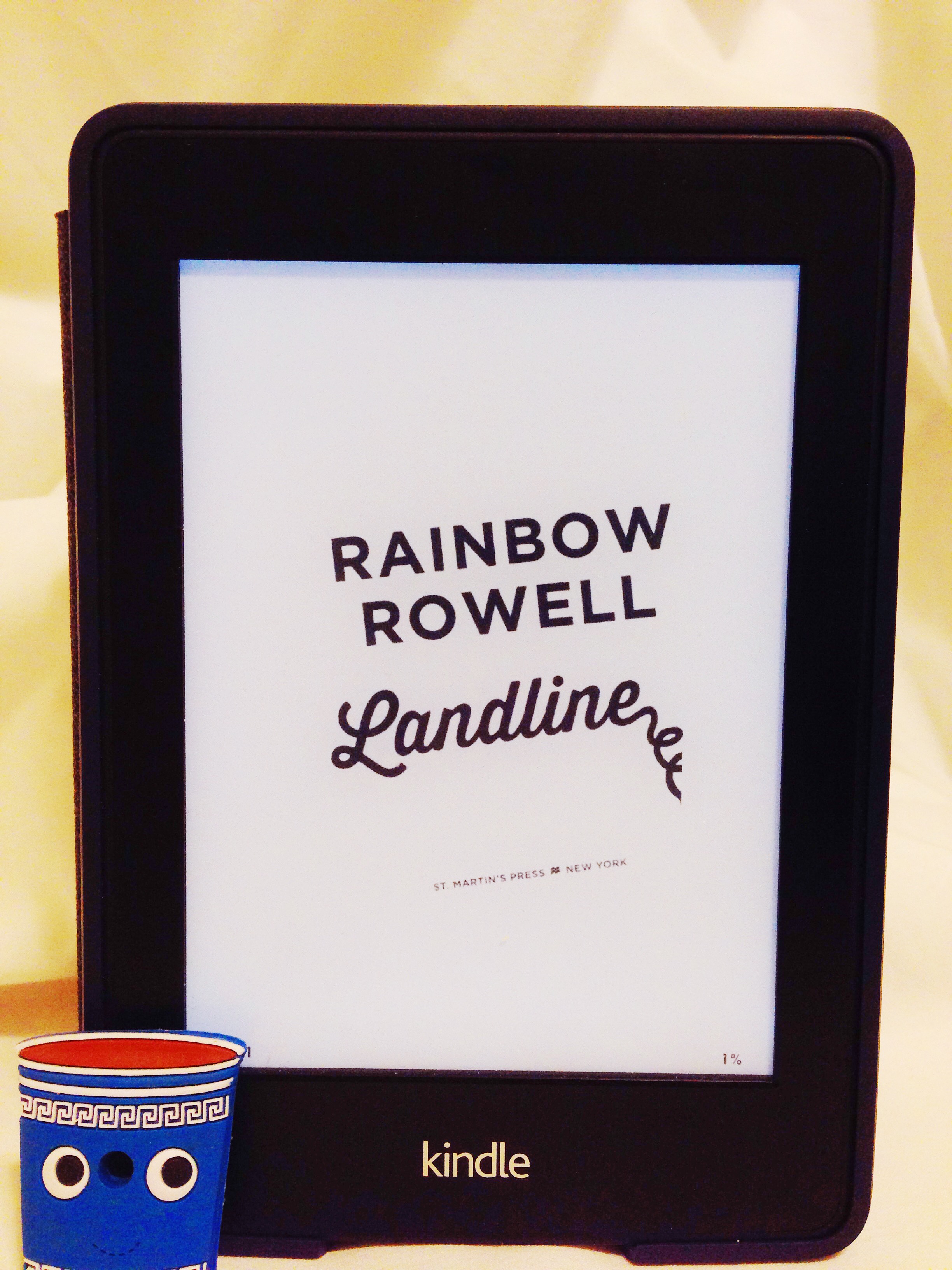
Landline is an adult fiction book about marriage. It uses the story of a woman whose marriage is falling apart to talk about the emotional connection that two people make in a long-term relationship. It also uses the impossible: a landline to talk to the past. Georgie’s husband and children have gone to Nebraska for Christmas; Georgie has had to stay back in LA for work, an incredible opportunity that came up at the very last minute. When Georgie calls them via her cell phone, it’s the present-time husband. When she calls via an old rotary phone connected to the wall, she talks to her husband from their college years. It’s a magic trick the author uses to get the two of them to talk honestly about all the issues that a married couple has.

Why should you read it?
Landline is cute. I like that it’s about a long-term relationship, in a real way. It’s not about falling apart, not really, and it’s not about falling in love. It’s about the ties that come from a life spent together. You don’t see much fiction that concentrates on that, much less that compares it to a friendship of similar length. (I wish that friendship had been a bit more fleshed out.) Also, I was grumpy that the conflict in the marriage came from a woman putting her career first. Can we please stop that trope? But overall: cute. Fun. Not life-changing.

A Grand Love

The Last Great Dance on Earth

What’s it about?
The Last Great Dance on Earth is the third of three novels about Empress Josephine. This book remains a very intimate portrait of her and her family, their loves and lives. But it’s probably the grandest part of her story. She’s fully in the palace, living the life of an empress, haunted by what happened to Marie Antoinette. Her continuing inability to get pregnant with Napoleon’s heir (likely because of her imprisonment during the Revolution) leads to their eventual divorce, where she moves to a country house (still a small palace). Napoleon is shown to continue to love her – wikipedia even states that “he had married a womb” (of his second wife). Little mention is made of Napoleon’s love affairs. I suppose it is the French myth that a man can remain married to one woman while having sex with many; a woman must remain loyal to her husband. To be fair, the first book does address this point – Josephine learns that this is what is expected of a good French wife. This volume chronicles her downfall – the complications of life at court, his family’s continuing jealousy and scheming, and her eventual death at her home in suburban Paris.

Why should you read it?
Because the three books together make up one story. There is no drop-off in quality from book to book and they really do read as one whole, split into three to make them manageable. It wouldn’t surprise me to find that the publisher releases them all as a single volume some day. They are a lovely portrait of life in Revolutionary and Napoleonic France.

Intimacy and Grandness

Tales of Passion Tales of Woe

What’s it about?
Tales of Passion, Tales of Woe is the second of three books about Empress Josephine, of Napoleon & Josephine fame. The three books make up one seamless story of Josephine’s entire life; this volume covers the time she marries Napoleon until just after he is crowned Emperor of France. It’s a surprisingly intimate look at their lives, given the sweep of events that lead Napoleon from a capable general to Emperor of France. We learn about their passion for each other as well as the petty jealousies of the Buonaparte family. Though, I suppose, when an empire is at stake, can the jealousy really be petty? It sure reads like it, though.

Why should you read it?
Because all three books are a good overview of what the French Revolution must have looked like, at least a little bit, from the inside. Not to mention that Josephine is an awfully likable character. You feel for her dread of telling her children she’s remarried, her pain at not being able to get pregnant again, her growing love for her husband. It’s a pleasant historical fiction about a very famous woman.

Towards glamour

Night Circus

What’s it about?
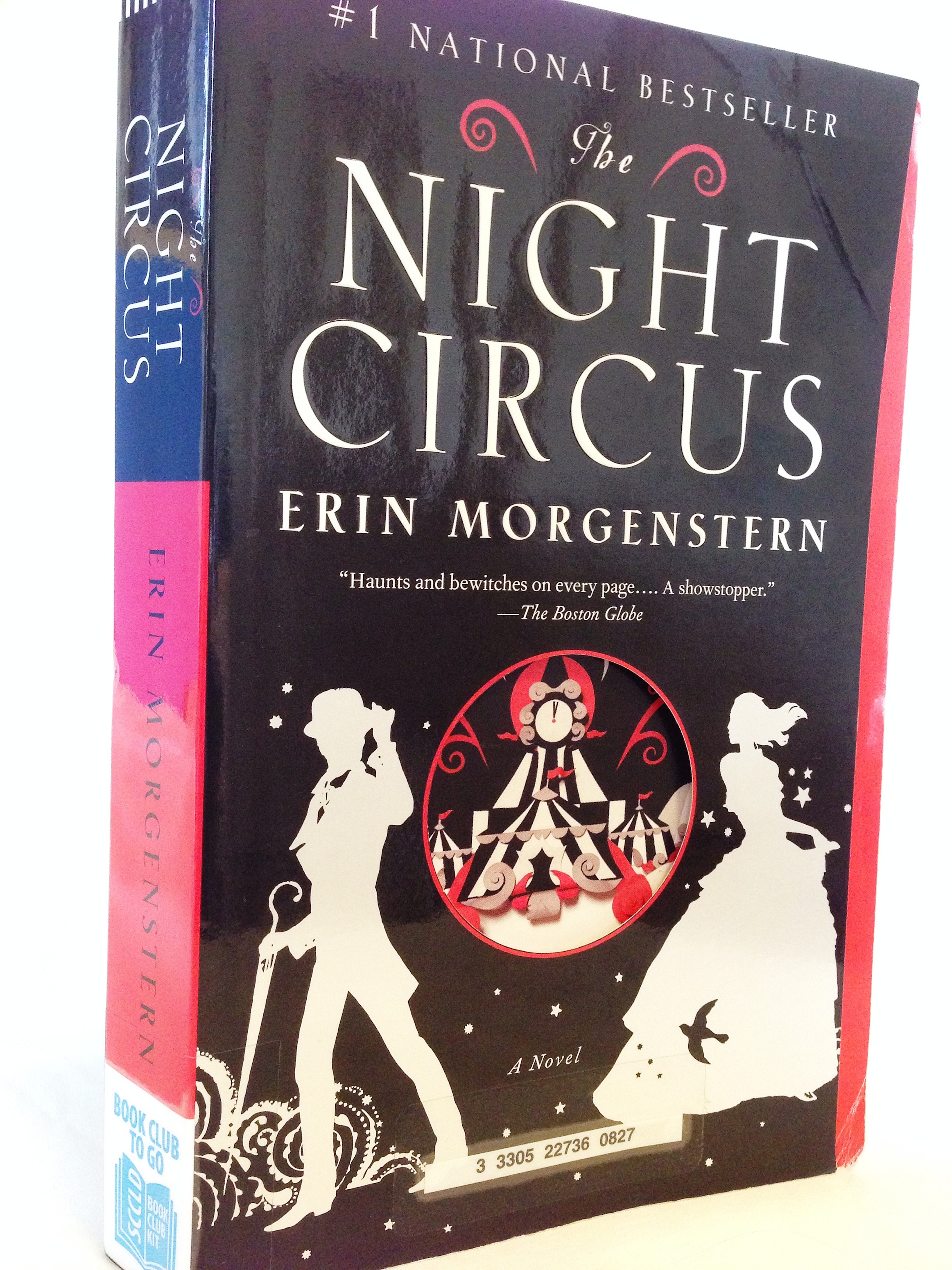
The Night Circus is kind of a romance, kind of a fantasy novel, and it’s a lot about glamour. There are two magicians older than we can know, who are in constant competition. Every so often, they each choose a student to compete against the other until one can no longer stand it. The remaining magician is the winner. For this particular competition Celia and Marco are both constructing a fabulous circus. It has amazing things – a tent that is only ice, a fire that never goes out – and its performers never age. Celia and Marco, of course, fall in love. So how will the competition end? Who wins? It’s worth the read to find out.

Why should you read it?
I mentioned glamour above. Glamour is an idealization. Glamour is beauty – these are both very lovely people. The circus, to its visitors, is graceful and mysterious. But what makes it not glamorous to the readers is that we see how it works. We see what it does to Marco and Celia to create this circus and keep it running. They do not lead rich, full lives. And glamour is also about sprezzatura, the art of making an idealization (the circus) appear easy. The circus is work and it wears on our heroes and it is not hidden. You should read The Night Circus because it can make you think about what goes into amazing creations, be they books or movies or buildings. It can be worth asking: what’s edited out? Why? What does the circus’ audience see? What do we see?