Don’t f*** with Circe

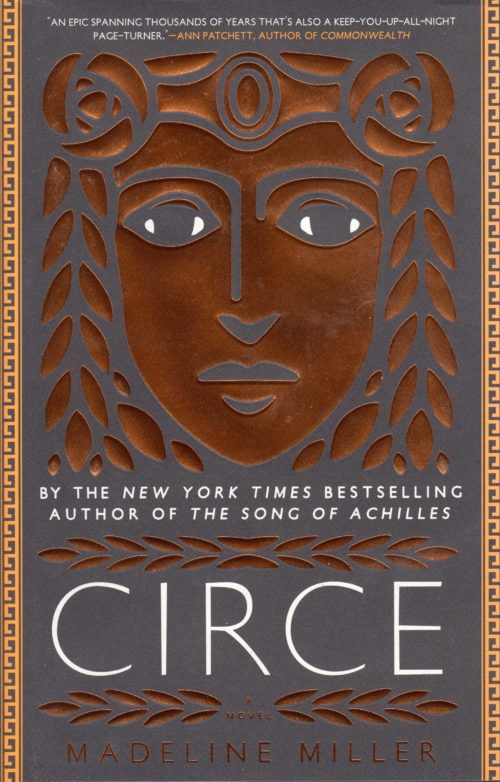
Madeline Miller collects the myths that mention Circe the nymph, gives her a backstory, and then puts it all into a very entertaining story.

If you remember Circe at all, it’s probably because you know her as one of the obstacles Odysseus had to face before he could get home (though, Calypso is the nymph with whom he dallies for seven years, not Circe). Circe is known for turning Odysseus’ men into pigs. In this telling, she still totally turns them into pigs – who knows what a bunch of hungry sailors are going to do to a woman living alone on an island. A woman has to defend herself, after all. But the story is more nuanced than that; she changes them back eventually and they use a hidden cove on her island to repair their ship over the winter, when it is usually too dangerous to sail anyway.

Overall, Circe is portrayed as a nymph who has been rather unjustly exiled to live on an island in the middle of the ocean, where she teaches herself magic from the herbs there. She makes friends with the animals – it’s very Cinderella in that way, now that I think about it. People and gods come to visit her over the years, and she’s even once allowed to leave the island for a particular task.

Circe is a woman who has been allowed to fully realize who she is and what she wants and figures out how to get it. It’s wonderful.

Recommended.
Unexpectedly relevant

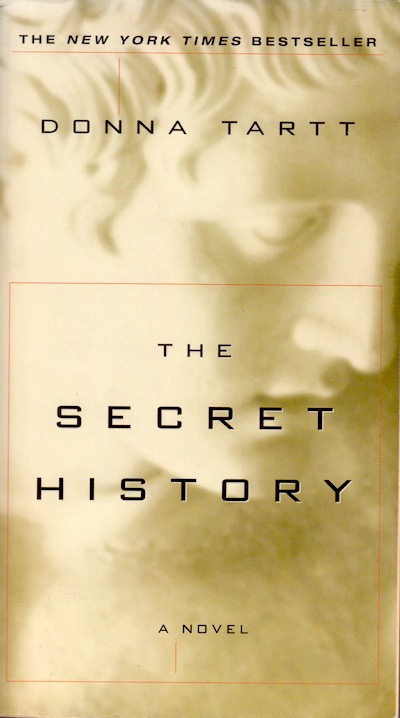
I read The Secret History about a million times in college. To this day, I’m not sure why I was so obsessed with it.

When the weather turned, it seemed like a good time for a re-read. The characters were much the same: so obsessed with finding some ancient Greek definition of beauty that they’d lost all their morality. Donna Tartt’s description of   the New England fall and winter were still lovely and haunting and they made me want to spend all my time at a small college in some tiny Eastern state.

What I wasn’t expecting though, was the parallels between Bunny, the tragi-comic character who drives much of the plot, and Donald Trump. They are both bumbling, in over their heads, cruel in a way that doesn’t realize its full consequences, utterly insistent that the world is the way he sees it, and charming (according to Maggie Haberman, Trump is captivating in a one-on-one setting in a way Obama never was). It made it kind of hard to read in spots, honestly.

That parallel made The Secret History surprisingly relevant – I got insight into our current president and the people around him in a way I was not expecting from a book published in 1992.

Recommended, and not just for nostalgia’s sake.

Why add a romance when it’s not needed?

After I finished At the Water’s Edge, I found myself wondering what makes a book a romance novel? Because this book has a lot of the trappings of one, including:

  • a heroine seeing the world for the first time,
  • a neglectful (at best) husband,
  • a sexual awakening,
  • someone who turns out to be secret royalty (reader, I rolled my eyes).

But I wouldn’t call it a romance. Why? Because it’s not about the romance – it’s about the heroine, her crappy childhood, where it got her, and then her adventures (for lack of a better word) making her realize that people have just been using her her entire life. The romance feels tacked on at the end, as though her editor or publisher insisted that there be a romance to draw people in. It would have maybe been a better book for not squishing it in.

I found her journey from neglected wife along for the party to an actual friend with caring relationships compelling. A romance with an underdeveloped character didn’t need to be tacked on.

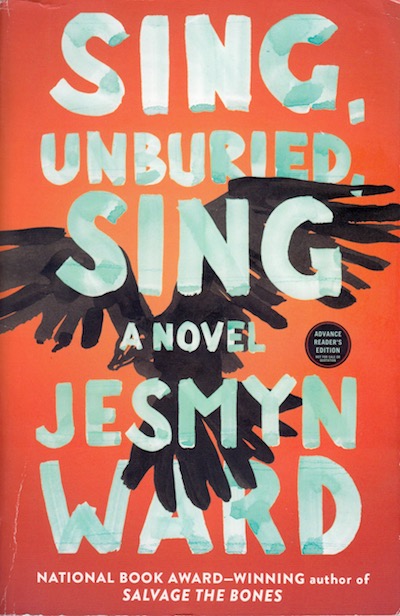
Different families get different kinds of stories

Different kinds of families get different kinds of stories in books. A family drama about a white family is probably upper-middle class, there’s probably someone who’s traveled overseas, and there’s probably lots of “finding yourself” type rhetoric. And there’s something to be said for that. Figuring out who you are and what you like is important.

But this is not that kind of book. This is a family drama about an African-American family. There are three generations and they are all poor. All the adult men in the story have been to prison. Racism weighs heavily on them. The father in the story is white; his father killed the man who would have been his brother-in-law. He has only met his children a handful of times; his parents haven’t met their half-black grandchildren. He is the one the mother and children travel to pick up from prison when his sentence is complete.

Sing, Unburied, Sing is a heavy book. You can feel the weight of the generations of racism on everyone. The 13-year-old boy is definitely figuring out who he is, but it’s not in a fun lets-go-see-the-world kind of a way. That kind of privilege is absent here. Instead, it’s about learning to take care of your people and understanding who your people are.

Recommended, but schedule a party or something afterwards.

Responsibility and relationships

I picked this up because I thought it would be fun and gossipy about a family, both today and two generations ago. Alas. It wasn’t.

It’s not that The Necklace was terrible, per se. It just wasn’t for me.

It’s about a love and what it means to go find yourself and how your relationships may or may not make it through such a journey of self-discovery. And is it selfish to take time for yourself, to figure out who you are and what you want? I mean, now it’s not, what with our extended adolescences. But it definitely used to be kind of a problem. What if you didn’t want to get married at 18? There’s a dude in this book who travels around the world to find himself, but expects his lady friend to wait at home for him. (To be fair, he does offer to marry her and bring her with, and she’s the one who demurs.)

This one is going to end up in one of the local free little libraries.

Skippable bits and infidelity

rich people problems by Kevin Kwan

I never really understood Elmore Leonard’s writing advice: Try to leave out the parts people will skip. As a reader, I don’t skip parts of books; sometimes they’re slow and maybe I’ll skim some, but fully skipping has always seemed like a recipe for misunderstanding.

But Rich People Problems has skippable parts. The bits with Eddie. The bits with Kitty. They’re two characters who are so venal – they just grate on me. They’re funny in small doses, but a little bit goes a long way. There is FAR too much of them in this book. I ran an eye over those parts as I turned the page, so I didn’t miss any major plot points.

Otherwise, I think this is a fun, fine book. It’s made me want to visit Singapore and eat all the food there. It even explores many different types of infidelity, without doing it in an in-your-face, overly intellectual kind of way. (Does that make it trashy? Maybe.)

Recommended, if you liked the first two.

Government that works

Going Postal by Terry Pratchett

I’ve been re-reading a handful of Terry Pratchett’s Discworld novels – of which Going Postal is one – that show a government that works. There’s political grandstanding, but never for long. The main feature of Ankh-Morpork is that its government works – it’s a mess, but shit gets done and it benefits the largest group of people. The reason that the grandstanding fails is that its been rigged by a group of elites who care more about their privileges than the mob. Beware the mob.

Going Postal is about the ins and outs of the post office and taking it from a non-functioning building full of undelivered letters to a working concern that quickly moves information from one place to another. It’s funny and interesting – our hero is an energetic con artist, and the bad guys are the people unwilling to put in the maintenance to keep a system going.

It gives me patience and hope, honestly.

Story as Therapy

Dive from Clausen's Pier

Once upon a time, I read The Dive from Clausen’s Pier. I over-identified with the main character, Carrie, who was from Madison, like me. She went to the University of Wisconsin, like me. She had the same boyfriend through high school and college, like me. When we both left Madison, it was all tied up in feelings of loss and wondering who we really were. Leaving Madison helped both of us figure out who we were.

So, in the novel, when Carrie goes back to Madison for a visit and it becomes clear that she’s going to stay. I got angry. Very, very angry. I finished the book, put it down and did not pick it up again for almost 14 years.

It was with some trepidation that I picked it up off the shelf a couple of weeks ago. “I’ll just read until she leaves for New York. I’ll skim it, it’ll be fine.”

Much to my surprise, time from both the story and Madison gave me the distance I needed to appreciate what Ann Packer had to say about the city where I grew up, the patriarchy, stability, love, and friendship.

Don’t get me wrong: I put it down when she returned to Madison. I still can’t deal with her going back. It’s too… No. Carrie, you were on your way to happiness, a career in fashion (a thing you clearly love), a relationship that wasn’t based on you taking care of him. Just, NOPE. Stay gone. Stay yourself.

But that’s not the story. And that’s ok.

Civilization will out

A Gentleman in Moscow

After the US Presidential Election, I was a tad despondent. Picking up A Gentleman in Moscow was part of my personal self-care, along with listening to classical music and watching Pride and Prejudice. Why? Elegance makes me feel better. Civilization is still there, it’s just being overshadowed by something else right now.

But also because A Gentleman in Moscow takes place right after the Russian Revolution. The communists have just come into power, and the gentleman in question, Count Alexander Rostov, has been placed under house arrest in an the premier hotel in Moscow. The exploration of how to be civilized and stand for what you believe in during a regime that basically wants to forget you exist and repudiates what you stand for is a thread through the book that was helpful.

Which isn’t the overall point of the novel – it’s more about how to master your circumstances, rather than your circumstances mastering you. How do you stay sane when you’re not allowed to leave the hotel in which you live, having been relegated to a garret apartment? But because his exile is in the Metropol Hotel (again, the best in Moscow), he gets to meet a wide swath of people, including foreign journalists and ambassadors, not to mention see a number of the party congresses that need a place to meet.

It’s just as elegant and in favor of civilization as Rules of Civility was. Both books are highly recommended.

Yes, she’s named for Ada Lovelace

The Unseen World by Liz Moore

The Unseen World was a lovely little book that I’m happy I read, but I never need to read again. There’s a girl, Ada. She’s being raised by her computer scientist father (a mother exists but she was a surrogate and has never been or wanted to be in the picture). They’re happy, but she is more than a bit of a nerd in the 1980s when it is definitely not cool to be a nerd. Her father, David, is starting to lose his mind, and she’s only in middle school.

That’s the premise anyway. The story ranges over decades as we explore David’s past and Ada’s future. It’s about families and friendships and how people live and work together.

It also presents what I consider to be an overly optimistic view of both VR and artificial intelligence that kept me from recommending it to my computer scientist husband. Nothing irritates him more than people who think either (but especially VR) is going to take over the world anytime soon.

That’s an aside. Generally, The Unseen World was enjoyable. Good for a plane flight or for some bedtime reading.